
The domestic wild-caught whitefish species buyers need to watch in 2026

Wild-caught whitefish buyers have learned to live with volatility and the pressure shows no sign of easing. Pricing moves faster than forecasts, lead times stretch without warning and familiar supply patterns no longer behave the way they once did. As markets continue to adjust, buyers are paying closer attention to which sources remain predictable when conditions tighten. In that recalibration, domestic wild-caught whitefish has moved back into focus—not as a reactionary choice, but as part of a more deliberate reassessment of what stability actually looks like in the long term. Domestic species U.S. buyers are paying closer attention to With quota adjustments expected for key whitefish stocks, ongoing geopolitical disruption and extended transit times still affecting frozen supply chains, buyers are planning for tighter whitefish availability in 2026. But according to Canastra Fishing Co., buyers shouldn’t be chasing one perfect replacement or reacting to short-term disruption. Instead, attention is best narrowed around a small group of domestic whitefish species. Pollock, haddock, and Acadian redfish each play a different role, but together they form a practical foundation buyers can plan around. These species land consistently, can move through shorter supply chains, and perform reliably across retail, restaurants, and foodservice. And most importantly, they allow procurement teams to stabilize supply without introducing new complexity. “Buyers don’t need surprises right now,” says David Lancaster, VP of sales and business development at Canastra Fishing Co. “They need fish that shows up the same way every week, even when the market doesn’t.” That focus on repeatable performance explains why these three species keep resurfacing in sourcing conversations; they remain dependable when volatility tests everything else. Why wild-caught whitefish buyers need to think in portfolios When whitefish markets tighten, the instinct is often to look for a single replacement. One species goes short, another fills the gap. In practice, that approach can lead to more volatility, not less. Buyers managing national retail, foodservice, or institutional supply increasingly think in portfolios instead. They want a small group of species that balance volume, performance, and differentiation, without forcing constant resets across specs, packaging, or menus. That mindset reduces operational friction and makes wild-caught whitefish sourcing easier to manage when conditions change. “Smart buyers aren’t asking which fish replaces another anymore,” says David. “They’re asking which mix of species keeps the whole supply steady.” These three domestic whitefish fit this approach well. Instead of relying on one species to do everything, buyers should be watching how pollock, haddock, and Acadian redfish work together to support stability across channels. Pollock: The volume anchor that buyers can plan around Pollock continues to play a foundational role in wild-caught whitefish procurement because it scales without introducing unnecessary risk. Landings remain strong, formats are flexible, and the species performs consistently in frozen and value-added applications. For buyers, pollock offers predictability. It supports high-volume and institutional needs where continuity matters more than novelty. Its natural moisture content and forgiving texture also help maintain yield and consistency across processing and preparation. “When buyers need a species that just works,” David says, “pollock is often where they look first.” That reliability makes pollock an anchor species. It absorbs pressure when markets shift and gives buyers breathing room to manage the rest of their portfolio more deliberately. RELATED: Why domestic seafood creates a more reliable supply chain Haddock: Familiar, premium, and dependable Haddock brings something different to the mix. It carries recognition and trust with consumers while delivering the clean flake and mild flavor buyers expect from premium whitefish. As availability for some traditional imports tightens, haddock continues to offer a dependable domestic fish without forcing buyers to compromise on familiarity. It fits easily into both retail planning and foodservice menus, allowing teams to maintain quality while simplifying sourcing. “Haddock gives buyers confidence,” David notes. “It’s familiar, it performs, and it doesn’t create extra questions for customers or kitchens.” Within a portfolio, haddock functions as a step-up option. It supports premium placements without introducing much volatility. Acadian redfish: Differentiation without instability Acadian redfish has moved from overlooked to closely watched among U.S. buyers. Handled carefully at landing and graded by experienced crews, redfish delivers firm texture and depth of flavor that stand out without requiring special treatment downstream. Its consistent sizing and reliable landings make it easier to integrate than many buyers expect. “Redfish rewards good handling,” David says. “When it’s treated properly, buyers get a fish that performs consistently and adds real interest on the shelf and on menus.” For buyers looking to differentiate without increasing risk, redfish fills a useful role. It expands the portfolio while staying aligned with the same expectations around predictability and control. Why this wild-caught whitefish portfolio will weather the storm Taken together, pollock, haddock, and redfish reflect what buyers are watching for right now. They land consistently, behave predictably, and move through systems buyers can understand and manage. That combination matters more than novelty or short-term pricing. As whitefish markets continue to adjust, buyers are gravitating toward species that reduce friction inside programs rather than adding to it. These wild-caught whitefish species are back in focus because they support that goal. Not as a reaction to disruption, but as part of a more measured approach to stability. As buyers recalibrate their sourcing strategies, the question is no longer which species looks best on paper. It’s which mix of species holds up when conditions change. Looking ahead Whitefish markets will keep changing. Freight, policy, and demand cycles always do. What needs to be different now is how buyers react. Rather than chasing short-term fixes, more teams are stepping back and asking which sourcing decisions make their programs easier to run over time. In that context, domestic wild-caught whitefish has earned renewed attention as a practical foundation for the future. If you’re reassessing how your wild-caught whitefish portfolio is structured, our team can walk you through how domestic pollock, haddock, and redfish fit different retail, foodservice, and institutional needs. Drop us a line to discuss sourcing options and availability.
Whitefish wholesale: Why ‘domestic vs imported’ no longer tells the full story

The whitefish wholesale market didn’t arrive at its current state by accident. Imported supply had once offered scale and pricing structures that buyers could plan around for decades. Recent data from NOAA estimates that between 75% and 90% of seafood consumed in the United States still comes from foreign sources. But while imported whitefish continues to dominate the supply chain, buyers are increasingly losing faith in it. Foreign dependence exposes buyers to risk where availability, consistency and yield matter most. Procurement teams are now managing freight volatility, tariff uncertainty, and processing delays that surface long after pricing decisions are made. This can disrupt budgets and pricing structures mid-season, mid-contract or mid-menu. Fish harvested as far away as Russia or Norway is often processed in China, meaning it can travel halfway around the world before reaching U.S. stores and restaurants. None of this ultimately benefits the buyer; it adds uncertainty and pressure to already tight margins. And what complicates the picture further is that even a lot of “domestic” supply no longer guarantees what many buyers assume. The hidden journey whitefish buyers rarely see Even domestic whitefish rarely moves in a straight line. Fish may land in U.S. ports, but then ends up being shipped overseas for processing, portioning or packaging before re-entering the domestic market. Each additional handoff extends freeze cycles, removes buyer oversight, and introduces quality variables buyers cannot correct downstream. Whitefish often suffers in moisture retention and yield, so extended time in frozen containers due to delays compounds quality issues. As a result, the real question facing buyers has shifted: it’s not whether whitefish is domestic or imported, but how far it travels after it’s caught and how much control gets lost along the way. “The tide is turning,” says David Lancaster, VP of sales and business development at Canastra Fishing Co. “Once whitefish leaves the country after it’s caught, buyers lose sight of it.” Even when fish starts in U.S. waters, sending it halfway around the world before delivery results in measurable quality drift. And that tradeoff no longer aligns with buyer expectations. “The system is stretched too far,” David adds. “It means buyers find themselves managing outcomes instead of controlling them.” RELATED: Why domestic seafood creates a more reliable supply chain What buyers actually gain when whitefish stays under domestic control The value buyers associate with domestic whitefish doesn’t come from origin alone. It comes from what happens when fish remains inside a controlled, domestic system from landing to delivery. Availability Shorter supply loops mean fewer points of disruption. Fish handled, processed, and distributed domestically avoids exposure to port congestion, overseas labor constraints, and international shipping delays. Consistency Domestic wholesale whitefish benefits from single handling and fewer freeze cycles. Portion integrity, texture, and yield remain more uniform when fish doesn’t pass through multiple processing environments. Sustainability Domestic fisheries operate under NOAA, with many domestic whitefish species also certified by the Marine Stewardship Council. Reduced transport distances also limit unnecessary handling and energy use tied to global shipping loops. Traceability When whitefish stays domestic, the chain of custody remains intact. Buyers retain clarity around where fish came from, how it was handled, and how long it has been out of the water. As consumers pay closer attention to ocean health and food origins, domestic whitefish gives buyers the foundation they need to build trust. These outcomes support planning, forecasting and long-term stability. They’re difficult to achieve once fish disappears into global processing networks. Origin alone no longer tells the full story Domestic sourcing only delivers these gains when fish remains within a domestic system. Once whitefish leaves the country, the distinction between domestic and imported begins to blur. Buyers still absorb the same risks tied to distance, handling variability, and loss of oversight. That reality forces a more nuanced view of the market. For buyers managing national procurement, that distinction matters more than ever. “Domestic doesn’t mean much if the fish still circles the globe,” David says. “What matters is whether it stays inside a system buyers can actually see.” Today, it’s control, not country of origin alone, that determines whether domestic whitefish can deliver on expectations. Against this backdrop, whitefish sourced from vertically integrated suppliers offers the safest route for buyers seeking predictability. Fish remains within U.S. waters, U.S. processing, and U.S. distribution from start to finish. Pollock continues to anchor buyers that require volume and reliable supply. Haddock delivers familiar performance across retail and food service. Acadian redfish adds a high-availability option that supports differentiation without sacrificing consistency. Together, these whitefish species demonstrate what buyers gain when whitefish supply stays close to home. Fewer variables, fewer surprises, and more control over outcomes that matter at scale. On the New Bedford docks, whitefish lands, gets sorted, and moves efficiently without leaving the country. No overseas detours. No unnecessary handoffs. No erosion of value after the catch. And for the crews, Product of U.S.A. means something deeper. It reflects how they are treated within the industry. It represents fair pay for fishermen, reliable contracts, and safer working conditions. Each label connects the fish back to the people who caught it, reinforcing pride in local fishing communities and the role they play in regional economies. Procurement built on long-distance processing and fragmented oversight may still function, but buyers increasingly absorb the cost. For buyers navigating tight margins and long-term commitments, simplicity and control have become the difference between a program that holds together and one that quietly erodes over time. “Buyers aren’t choosing between domestic and imported anymore,” David adds. “They’re choosing between control and exposure, and that choice shows up in their margins.” Whitefish procurement succeeds when control stays close, and increasingly, that starts at home. Ready to stabilize your whitefish supply? Drop us a line to discuss domestic wholesale whitefish sourcing.
Why domestic seafood creates a more reliable supply chain

During a routine inspection, a seafood buyer looks over a pallet of imported fish, scanning each label the way he’s done thousands of times. The origins stretch across oceans—Indonesia, China, India—all routed through a maze of shipping lanes, customs checks, and transport hubs before landing on a U.S. dock weeks later. It’s a system that works. Until it doesn’t. One tariff, one port closure, or one conflict on the other side of the world can disrupt everything from delivery timelines to final costs. But a few steps away sits a pallet carrying a very different label: “Product of U.S.A.” He notices the difference immediately. Not just in the mileage, but in the color, the texture, the smell. The domestic fish looks cleaner, firmer, fresher. It hasn’t taken a five-week voyage through multiple time zones. It hasn’t sat in a port backlog waiting for clearance. It hasn’t passed through a chain of processors that the buyer has never met. For years, buyers overlooked domestic seafood because imported supply seemed plentiful and cheap. But each global disruption has chipped away at that illusion. The United States has access to some of the most productive, responsibly managed fisheries in the world—waters that produce scallops, haddock, pollock, monkfish, and dozens of species that rarely get the spotlight. And while 80% of the seafood Americans eat still comes from abroad, the winds of change are blowing through the supply chain… The disruptions reshaping the seafood supply chain In recent years, buyers have had a front-row seat to the weaknesses of global seafood logistics. Events that once felt distant—tariff changes, port congestion, conflicts in key shipping lanes—quickly became issues that directly affected U.S. buyers trying to keep shelves stocked and menus stable. Canstra Fishing Co.’s VP of business development and sales, David Lancaster, who has worked across every level of the seafood industry for more than thirty years, watches these shifts closely. He sees a straight line between global volatility and buyer frustration. “Every time the world hiccups, imported seafood takes the hit,” David says. “And buyers end up paying for delays they had no hand in creating.” Those delays impact delivery schedules, price stability, planning, and consumer trust—all areas where domestic seafood offers real advantages. An opportunity for American buyers The United States imported $25.5 billion in seafood in 2023, outpacing exports by more than $20 billion. Consumption keeps rising, but domestic sourcing has not kept pace. Instead, buyers lean on foreign production to fill demand for familiar species like shrimp, salmon, and tuna. It’s a model built on the assumption that international supply chains will function smoothly—even when the world doesn’t. But the U.S. is ignoring its access to abundant, well-managed fisheries from New England to Alaska, producing species with excellent flavor, dependable seasons, and strong environmental oversight. David sees the disconnect clearly. “We have world-class fish right here,” he says. “The problem isn’t supply, it’s awareness. Buyers don’t always realize how many domestic options they actually have.” Domestic seafood can’t replace every pound of imports, but now that buyers are starting to recognize the reliability, traceability, and flavor advantages sitting in their own waters, it won’t be long before it takes a far larger share of the market than it does today. Control from boat to buyer Domestic sourcing gives buyers something global supply chains can’t: control. When seafood moves through American waters, American vessels, and American processors, each step becomes clearer and easier to manage. There are fewer handoffs, fewer surprises, and far fewer variables that can compromise quality. For vertically integrated fleets like Canastra Fishing Co., that control extends even further. Vessel ownership Canastra Fishing Co. owns its boats. The company oversees every trip: how fish are handled, iced, and graded. Quality stays consistent because the people catching the product follow the same standards every season. Controlled distribution No overseas shipping lanes. No customs bottlenecks. No five-week transit from one hemisphere to another. Domestic deliveries move on predictable timelines that buyers can actually plan around. Fair, stable pricing Imported seafood prices shift with fuel spikes, insurance hikes, and tariff policy. Domestic pricing is tied to the fish, the labor, and the market, not international politics. Skilled workers Generations of experience mean fewer surprises, clearer forecasting, and a deeper understanding of how to maintain supply throughout the year. David puts it simply, “The buyers I talk to want one thing above all: no surprises. “Domestic fleets are the only way to deliver that level of consistency. That’s what allows Canastra Fishing Co. to become a true partner to domestic seafood buyers, not just a supplier.” Traceability and compliance: A standard buyers can trust The traceability and compliance burden grows heavier every year, especially for public institutions and national restaurant groups. Yet, 20-32% of wild-caught seafood imported into the U.S. comes from IUU fishing (illegal, unreported, or unregulated operations). Once that product enters foreign supply chains, verifying its origin becomes nearly impossible. Domestic fleets, on the other hand, operate under strict federal oversight, with reporting and documentation that follow every pound from vessel to buyer. This transparency reduces audit risk and strengthens trust at every stage of the chain. “When your fish comes from New Bedford, you know exactly who caught it,” David says. “You can’t say that about a container that started its journey in another hemisphere.” Strengthening American communities Domestic seafood benefits more than buyers. It supports coastal communities, processing facilities, distributors, and the generational knowledge that keeps American fisheries strong. Buyers who partner with domestic suppliers keep economic value rooted in the towns that built this industry. Every domestic order keeps revenue moving through U.S. ports, helps retain skilled crews, and supports American jobs. Canastra Fishing Co.’s mission reflects that commitment. “When family boats stay active, the whole port stays strong,” David says. “That stability doesn’t just help New Bedford—it helps every buyer who depends on a reliable American fleet.” RELATED: Why fair commercial fishing wages matters for the US seafood supply Dependability from U.S. waters to your shelves
What is redfish? A practical guide for buyers and marketers
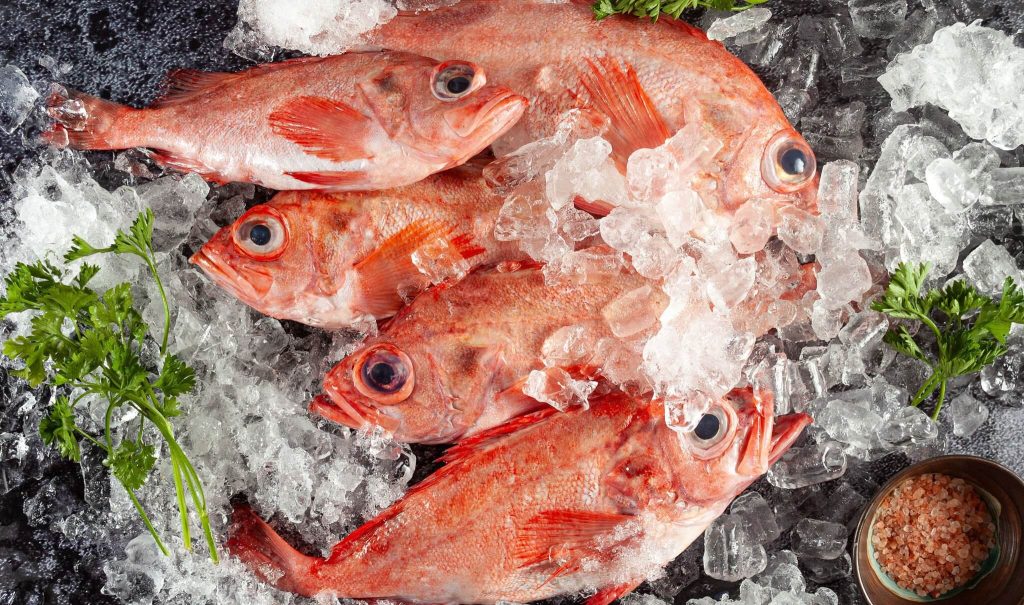
Few whitefish arrive at the dock looking quite the way redfish does. Its red-orange skin stands out immediately against the ice. Beneath the vibrant color lies clean, pale flesh with a firm but flaky structure; familiar, yet distinct enough to make you pause and look twice. Acadian redfish is a unique species that has been part of New England fishing for generations, though not always in equal measure. Periods of heavy pressure reshaped the fishery, forcing long stretches of restraint and recovery. But redfish has returned under regulations that support long-term stability and sustainability. And that steadiness matters to today’s buyer. Redfish: An overview Acadian redfish (Sebastes fasciatus), also known in wholesale channels as “Atlantic ocean perch” or “golden redfish,” is a cold-water whitefish harvested from the Gulf of Maine and Georges Bank. Redfish belongs to the rockfish family, not snapper or drum. Rockfish grow slowly, live long lives, and require tightly managed fishing strategies. They are ovoviviparous, a reproductive process in which eggs develop internally before the young are released. Unlike many global whitefish species that depend on extended processing routes and multi-country handoffs, redfish moves through shorter, more transparent domestic systems for U.S. buyers. In practical terms, redfish behaves more like a planning species than a reactionary one. It doesn’t spike dramatically in volume or disappear without warning. It shows up week after week, which is exactly what large-scale procurement teams value. That reliability explains why redfish increasingly appears alongside pollock and haddock in today’s sourcing conversations—complementing them rather than competing with them. Each species plays a different role, and redfish fills the space between volume security and differentiation. MORE: The domestic wild-caught whitefish species buyers need to watch in 2026 A brief history of redfish For much of the mid-twentieth century, Acadian redfish formed the backbone of New England’s frozen whitefish trade. Its mild flavor, steady landings, and suitability for filleting made it a natural fit for large-scale processing. That approach eventually caught up with the industry. By the 1980s, decades of heavy pressure had reduced stocks and forced a fundamental reset. Quotas tightened, access narrowed, and management shifted from maximizing landings to rebuilding long-term stability. Over time, coordinated federal management and controlled harvesting allowed the stock to rebuild. By the early 2010s, regulators formally recognized Atlantic ocean perch as rebuilt. But unlike species that rebound quickly and then swing wildly with demand, redfish came back under limits designed for long-term stability. That history is why today’s landings look steady instead of explosive, and why buyers see consistency rather than spikes. How redfish is caught Acadian redfish is caught from the cold, rocky bottoms of the ocean using regulated bottom trawl gear. Quotas, seasonal oversight, and monitored landings shape how much the fish comes to market and when. Redfish are graded quickly, iced promptly, and moved efficiently through domestic channels. Fewer handoffs mean fewer freeze cycles, less moisture loss, and more uniform yield downstream. In practical terms, buyers receive fish that behaves the same way week after week. Color holds. Texture stays intact. Portioning remains predictable. Today, those handling advantages matter more than ever. What does redfish taste like? Redfish delivers a mild, slightly sweet flavor with a clean finish and a medium flake. It doesn’t lean oily, briny, or assertive. It lands squarely in familiar whitefish territory, close to cod and haddock. From a buyer perspective, redfish doesn’t force menu rewrites or consumer education campaigns. As buyers look to expand or rebalance whitefish portfolios, species that require justification slow everything down. Redfish moves in the opposite direction. It feels known even when it’s new to a menu, which allows teams to introduce it without disrupting flow. How to cook redfish Redfish behaves the way experienced kitchens expect whitefish to behave. It holds together under heat, releases moisture predictably, and responds well to standard preparation methods already in use across retail and foodservice. Pan-searing remains the most common approach, especially for skin-on fillets. The skin crisps cleanly while the flesh stays tender, producing a familiar presentation that doesn’t require adjustment in timing or technique. Baking and roasting work just as well for batch preparation, where consistency matters more than flair. Redfish also performs reliably in stews, tacos, and wraps, where flake integrity and moisture retention carry more weight than appearance. It absorbs seasoning evenly and maintains structure through service, which makes it suitable for high-volume environments. How to fillet a redfish (and why most buyers never need to) In wholesale programs, redfish almost always arrives as a finished product. Buyers typically receive trimmed redfish fillets—fresh or frozen, skin-on or skinless—with frozen formats supporting greater consistency from storage through service. This keeps prep predictable and reduces variability across locations, shifts, and service formats. In practice, the filleting process mirrors that of other whitefish. The bone structure is straightforward, the fillet releases cleanly, and portioning stays consistent once specifications are set. More importantly, redfish offers natural consistency in size and texture. Fillets grade evenly, cook uniformly, and perform the same way across batches. For buyers managing large programs, repeatability matters more than marginal differences in price. At scale, success comes from minimizing surprises. Redfish supports that goal by behaving the same way from delivery through service. Redfish vs red snapper Few species comparisons create more confusion than redfish vs red snapper. Despite similar names and colors, the two fish occupy very different roles in the market. Red snapper comes from warm-water reef systems, carries firmer texture, and often commands premium pricing tied to limited access and demand. Acadian redfish follows a different path. It comes from cold North Atlantic waters, supports consistent commercial landings, and delivers a mild, flaky profile designed for everyday use rather than special-occasion positioning. Where snapper often anchors center-of-plate features, redfish integrates easily into regular rotation without forcing pricing or menu constraints. Attribute Acadian redfish Red snapper Primary market role Everyday whitefish for stable programs Premium feature fish Habitat Cold North Atlantic waters Warm-water reefs Harvest scale Consistent commercial landings More limited access Texture