
The value of an experienced fishing crew for seafood buyers

Savvy seafood buyers can spot a poorly handled fish from a mile away. They see it in the texture, in the scuffed skin, in the uneven color… And according to seasoned fishing captain Henrique Franco, those problems can emerge well before they arrive at the dock. The Portuguese native—who has spent decades fishing the North Atlantic Ocean—firmly believes that quality seafood starts and ends with the crew handling it. When all is said and done, Henrique builds his crews and processes around one priority above all: “You’ve got to take care of your fish.” What experience looks like on deck Seasoned deckhands protect texture and appearance through simple habits that inexperienced crews often treat as nice-to-haves. They keep the pace steady during the haul, protect the fish from bruising, and keep the hold organized lot by lot. “When we do the hauling back, that’s the most dangerous moment,” says Henrique. “If you don’t communicate, somebody’s going to get hurt.” The 53-year-old captain watches how people work together when the pace rises. He wants crew members who look out for each other and keep the workflow clean. Experienced crews treat the haul like a drill they’ve run a thousand times. They read the deck the way a driver reads traffic, because bodies, gear, and fish all move at once. They keep space around tensioned lines, watch for swing, and call out problems before they stack up. That teamwork shows up in the fish and turns a trip into seafood that buyers can plan around—and it all starts with the people who know the work. MORE: Why fair commercial fishing wages matter for U.S. seafood supply The quality chain from deck to hold Once the fish hits the deck, it’s clear to Henrique whether or not a crew member understands the value of proper handling. “Sometimes they don’t clean. They don’t wash the fish really well,” Henrique says. “Sometimes too much ice, sometimes not much ice at all. “I’m very strict about that with my crew. We’ve got to take care of the fish, wash it well, and ice it right.” Ice protects appearance and moisture during long hours at sea. If this crucial step is missed, the fish arrives looking tired, and buyers read it immediately. “With blackbacks [winter flounder], for example, you’ve got to ice them belly up. If you put them the wrong way, they turn red and buyers don’t pay as much. “If you don’t take care of the fish, you go to the dock and instead of a dollar fifty, you get eighty cents.” Crew members who chase speed and forget consistency reveal their inexperience. Henrique puts it plainly: a crew can work hard and still lose value if they mishandle the fish. Handling mistakes might not seem dramatic on deck, but captains and companies pay for them at the dock and on the processing floor. “You can lose a whole trip like that,” Henrique says. A strict approach to handling doesn’t just matter to captains, it matters to buyers too. A stable crew produces a stable process, and a stable process produces predictable lots. RELATED: Why domestic seafood creates a more reliable supply chain Where quality starts to break down Convinced by his years sharing boats with crews that can make or break a trip, Henrique manages the risk before the boat even leaves the pier. “I have to know the person. It’s hard to give a job to someone I don’t know,” he says. Henrique uses the waterfront the way other industries might use references. “I ask other captains about him. ‘Is he a good guy?’ I need information.” In fact, the risk-averse captain would take a harder trip over a hire he’s not 100% sure of. “Sometimes I’d rather go one hand short until I know I’ve got a good guy,” he says. Henrique makes that call for safety, but he also makes it for quality. “I do everything I can to avoid problems with the boat, with my crew, or with me,” he says. But that doesn’t mean the next generation doesn’t get an opportunity on Henrique’s boat. It just means experience needs to be passed down into the right hands. RELATED: The Canastra Story: A family name that carries new meaning Fishing crews that last Experience doesn’t stay private on a good boat. It moves down the line through correction, repetition and clear expectations. “I always have the experienced guys teach the new guys the right way,” Henrique says. That transfer of knowledge matters in the commercial fishing industry. A crew learns fastest when a seasoned hand fixes a mistake in real time. But for those lessons to stick, Henrique says a new fisherman has to have a passion for the trade. “To be a fisherman, you’ve got to love it. If you do this just for the money, your life will be miserable.” The crews that last build habits that long-term buyers can trust. They protect each other, protect the gear and protect the fish, because they know the cost when they don’t. The buyer sees the crew in the product The best crews consistently land fish that looks right, holds up well and arrives with fewer surprises. And that is largely determined by the experience on the boat. Buyers doing their due diligence to secure a reliable seafood supply would do well to look past the label and start asking who worked the deck. Henrique adds, “If your guys don’t have experience, your fish won’t be good quality.” Ready to work with a fishing company that knows its boats and their crews like family? Drop us a line to talk through Canastra Fishing Company’s handling standards and what real consistency looks like from boat to dock.
The Canastra Story: A family name that carries new meaning

Long before it was a surname associated with boats, auctions, and the New Bedford fishing community, canastra was a Portuguese word for a sturdy basket used to carry food, often fish. But while the Canastra family’s roots in the Azores were shaped by maritime trade, their connection to the fishing industry would actually emerge some time later. The Canastra name would come to align with the role the family would play in New Bedford’s modern fishing economy—and their responsibility to the community built around it. Finding the waterfront The Canastra family’s voyage into seafood began with Raymond Canastra. Born in New Bedford and raised in nearby Fairhaven, he grew up close to the harbor and would watch the comings and goings of the fishing community around him with interest. In the late 1970s, Raymond joined the lumpers on the New Bedford docks. Draggers routinely returned with loads exceeding 120,000 lbs of codfish, requiring multiple crews to unload vessels through the night. Watching friends transition from the docks to the vessels, and seeing the livelihoods they were able to build, Raymond decided to go to sea himself. Over time, he earned himself a place aboard a boat and eventually became a captain. While Raymond built his understanding of the industry on the water, his brother Richard took a different route. After graduating from Fairhaven High School, Richard entered the snack food business, operating wholesale routes across Rhode Island and Massachusetts. By his mid-twenties, he had built and managed a regional operation, gaining firsthand experience in sales, logistics, pricing, and cash flow. After years at sea, Raymond wanted a role that would allow him to stay closer to home and raise his young daughter, Cassie. It was a decision that naturally pulled him toward family. Two paths converge In 1989, the brothers decided to work together. They launched a shoreside unloading and wholesale operation, initially handling scallopers before expanding into draggers. Raymond told NOAA at the time, “I talk all the boat talk with the boats. Richard takes care of all the business end of it. “The boats are getting paid. The money’s being collected. I can do my gig and he does his. It works out well.” Richard added, “We complement each other. It’s only been positive for us because we’re just not looking one way, we’re looking at all the aspects of the business.” Together, the Canastra brothers built a business that worked for them and the boats they served. But beyond their own operation, the broader system on the waterfront was beginning to show deep cracks. A fair auction for New Bedford The private auction that followed the fishermen’s strike of the mid-1980s operated behind closed doors, relying on informal arrangements that left little room for transparency. Pricing disputes and inconsistent weights became routine. For vessels coming off long trips, the fight often continued long after they tied up. Looking for alternatives, Raymond and Richard traveled to Portland, Maine, where the city operated a publicly owned display auction. There, fish was laid out for inspection before bidding began. Buyers competed openly on what they could see, and fishermen understood how prices were reached. The model resonated with the Canastra brothers. In 1994, they brought that concept to New Bedford with the Whaling City Seafood Display Auction. The operation was modest at first, and the first days were uncertain, but buyers soon realized its potential. The display auction worked. A new horizon In the mid-1990s, Richard traveled to Brussels for an international seafood trade show, originally looking for buyers for skate wings. While there, he was introduced to an electronic auction system used across Iceland. Entire national markets operated through digital bidding, allowing buyers to participate remotely while maintaining real-time price discovery. Richard spent weeks in Iceland studying how the system worked, then returned to New Bedford to adapt it for the U.S. market. The brothers installed dedicated communication lines, built the necessary infrastructure, and worked closely with vessels and buyers to prepare them for a fundamental shift in how seafood would be sold. In February 1997, they launched the Buyers and Sellers Exchange (BASE). Sellers and buyers no longer occupied the same room during bidding. The separation protected the process from influence and allowed prices to reflect quality alone. By changing how transactions happened, the Canastra brothers changed what fairness looked like on the waterfront. Pressure on the system The launch of the electronic auction marked a turning point for the New Bedford waterfront, but it also brought resistance. Tensions surfaced in the form of threatening phone calls. Then, late one night, Raymond was called to an alarm at the auction building. He discovered gasoline fumes and a five-gallon drum beneath the auction floor with an unlit wick attached. Fire officials later confirmed that, had the device been lit, the damage would have been extensive. Raymond and Richard restored the facility, brought the auction back online, and continued operations. By the end of that year, BASE had become the only electronic seafood auction operating in the United States. Raymond said, “We were the first company in New Bedford to have digital scales that are checked monthly just for their accuracy.” That approach to market transparency and regulation was later examined in broader discussions of the U.S. seafood industry, including Richard being featured on Netflix’s Rotten series. Despite the pressure, the system held. And as it did, its influence on the waterfront expanded quickly. Reshaping the waterfront By the early 2000s, the auction handled product from roughly 180 vessels and more than 40 buyers. Trucks arrived daily from major seafood markets, including Boston, New York, Philadelphia, Seattle, and ports throughout New England. Scallops alone moved through the system in volumes that helped establish New Bedford as the most valuable fishing port in the United States by dollar value. Other ports took notice. Operators from across the country reached out to understand how the system worked, asking about digital bidding, vessel coordination, and communication infrastructure. The software developed in New
Why fair commercial fishing wages matter for U.S. seafood supply

Forklifts trundle across the concrete. Ice rattles down metal chutes. And as the New Bedford crews sort scallops into bins and pack redfish in ice, you’ll hear fishermen talking through the realities of the job—long hours, rising costs, and the constant pressure of making a living in the nation’s top-value port. Commercial fishing remains one of the toughest jobs in America. Crews juggle unpredictable conditions, fluctuating quotas, and the rising cost of keeping a vessel ready for another trip. Their income depends on a share system that rewards strong landings but absorbs every hit that comes with a difficult season. For years, New Bedford’s seafood display auction, BASE, brought structure and transparency to that system. The Canastra family helped build it so fishermen could earn a fair price based on open competition, not backdoor deals. But even the strongest systems face pressure when deep-pocketed outside interests work around them. The strain on commercial fishing wages no longer comes from the sea. It comes from big corporate ownership tightening margins on the people doing the hardest work. “When you let private equity dictate prices, crews lose control over their own future,” says Canastra Fishing Co. CEO Cassie Canastra Larsen. “And that’s when communities start to crack.” The port of New Bedford: High value, local pressure New Bedford has held the title of America’s highest-value fishing port for more than two decades. The numbers rise on spreadsheets, in annual NOAA reports, and across headlines highlighting the city’s dominance in scallops. But on the docks, that success feels different. Fuel climbs. Maintenance climbs. Insurance climbs. Regulations shift. Markets swing. Even in a port known for its strength, the margin between success and struggle is thinner than most people realize. Every year, fleets work harder to adapt to pressures far beyond their control, keeping the waterfront moving one trip at a time. And if we don’t look after this vital community, the nation’s supply chain will soon suffer. How fair commercial fishing wages protect supply chain quality and stability The quality that New Bedford is known for doesn’t come from luck. It comes from crews who know how to work the gear, protect the catch, and keep a trip productive even when conditions turn. Fair commercial fishing wages help keep those crews on the water. In fact, a stable, well-paid team brings consistency to everything that matters to buyers. Handling Experienced crews know when scallops need to hit the ice and how to stack bags without crushing product, protecting both texture and color. Traceability Long-standing crews maintain clean logs and understand the compliance expectations that come with domestic sourcing. Catch efficiency Good crews fish smarter and bring in steady landings season after season. Quality control The same set of hands performing the same processes produces predictable size, flavor, and appearance. For hospitality buyers, that consistency means stable menus and fewer substitutions. For institutional buyers, it means domestic supply that meets documentation standards and avoids the political and logistical risks tied to imports. Strong commercial fishing wages don’t just support the workforce; they support the reliability buyers count on every week. Community impact: Protecting New Bedford’s families Walk a few blocks from the waterfront, and you’ll see why this conversation matters beyond the docks. New Bedford’s neighborhoods are shaped by families who trace their roots to Portugal, the Azores, and Cape Verde—alongside newer immigrant communities from places like Guatemala, who now play an essential role in the city’s fishing and seafood economy. The working waterfront ties all of these histories and cultures together. New Bedford is a city where tradition runs deep. A strong paycheck doesn’t just keep a crew member afloat; it keeps working boats in family hands, supports local shops, and helps the next generation stay connected to a trade their parents and grandparents built. And when nearly one in five residents lives below the poverty line, every trip matters for the neighborhoods built around the waterfront. That’s the philosophy at Canastra Fishing Co. “We want families to stay on the water,” says Cassie. “Our goal is to support the fleet, strengthen the port, and make sure fishermen are rewarded for the work they do. We’re here to build something that lasts for the people who built this harbor.” When commercial fishing wages sink, the next generation doesn’t just leave the industry—they leave ownership behind. And when a family can’t keep a boat running, that vessel rarely sits idle for long; it usually gets sold. Increasingly, those sales go to large outside corporations with no ties to New Bedford. Once that happens, the value of the boat, the quota, and the revenue it generates leave the community entirely. Local wealth moves into the hands of companies that treat the fleet as an investment vehicle rather than a piece of the city’s identity. “When a family loses a boat, the whole community loses a piece of itself,” Cassie says. A stronger seafood industry starts with the people who bring the catch home, and supporting them starts with choosing suppliers who refuse to compromise on pay. Fair commercial fishing wages strengthen communities. Strong communities keep fleets alive. And strong fleets protect the future of American seafood. If you want seafood that delivers consistency, clarity, and genuine traceability, start with the fleets that prioritize fair pay. Canastra Fishing Co. builds its entire model around supporting the crews who make our product possible—and the buyers who depend on it. Explore our products or start a conversation with our friendly sales team today.
What is redfish? A practical guide for buyers and marketers
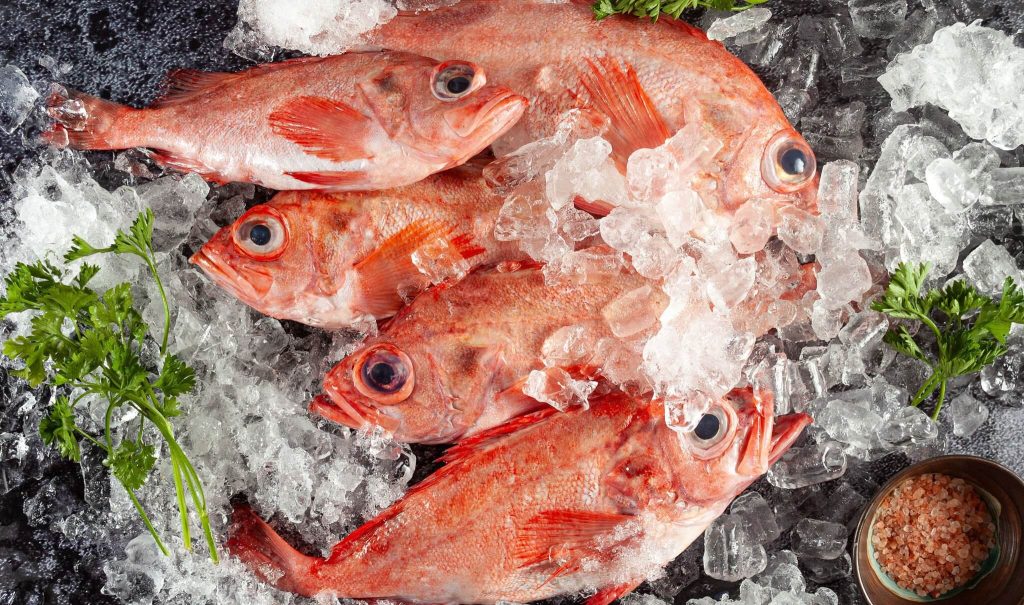
Few whitefish arrive at the dock looking quite the way redfish does. Its red-orange skin stands out immediately against the ice. Beneath the vibrant color lies clean, pale flesh with a firm but flaky structure; familiar, yet distinct enough to make you pause and look twice. Acadian redfish is a unique species that has been part of New England fishing for generations, though not always in equal measure. Periods of heavy pressure reshaped the fishery, forcing long stretches of restraint and recovery. But redfish has returned under regulations that support long-term stability and sustainability. And that steadiness matters to today’s buyer. Redfish: An overview Acadian redfish (Sebastes fasciatus), also known in wholesale channels as “Atlantic ocean perch” or “golden redfish,” is a cold-water whitefish harvested from the Gulf of Maine and Georges Bank. Redfish belongs to the rockfish family, not snapper or drum. Rockfish grow slowly, live long lives, and require tightly managed fishing strategies. They are ovoviviparous, a reproductive process in which eggs develop internally before the young are released. Unlike many global whitefish species that depend on extended processing routes and multi-country handoffs, redfish moves through shorter, more transparent domestic systems for U.S. buyers. In practical terms, redfish behaves more like a planning species than a reactionary one. It doesn’t spike dramatically in volume or disappear without warning. It shows up week after week, which is exactly what large-scale procurement teams value. That reliability explains why redfish increasingly appears alongside pollock and haddock in today’s sourcing conversations—complementing them rather than competing with them. Each species plays a different role, and redfish fills the space between volume security and differentiation. MORE: The domestic wild-caught whitefish species buyers need to watch in 2026 A brief history of redfish For much of the mid-twentieth century, Acadian redfish formed the backbone of New England’s frozen whitefish trade. Its mild flavor, steady landings, and suitability for filleting made it a natural fit for large-scale processing. That approach eventually caught up with the industry. By the 1980s, decades of heavy pressure had reduced stocks and forced a fundamental reset. Quotas tightened, access narrowed, and management shifted from maximizing landings to rebuilding long-term stability. Over time, coordinated federal management and controlled harvesting allowed the stock to rebuild. By the early 2010s, regulators formally recognized Atlantic ocean perch as rebuilt. But unlike species that rebound quickly and then swing wildly with demand, redfish came back under limits designed for long-term stability. That history is why today’s landings look steady instead of explosive, and why buyers see consistency rather than spikes. How redfish is caught Acadian redfish is caught from the cold, rocky bottoms of the ocean using regulated bottom trawl gear. Quotas, seasonal oversight, and monitored landings shape how much the fish comes to market and when. Redfish are graded quickly, iced promptly, and moved efficiently through domestic channels. Fewer handoffs mean fewer freeze cycles, less moisture loss, and more uniform yield downstream. In practical terms, buyers receive fish that behaves the same way week after week. Color holds. Texture stays intact. Portioning remains predictable. Today, those handling advantages matter more than ever. What does redfish taste like? Redfish delivers a mild, slightly sweet flavor with a clean finish and a medium flake. It doesn’t lean oily, briny, or assertive. It lands squarely in familiar whitefish territory, close to cod and haddock. From a buyer perspective, redfish doesn’t force menu rewrites or consumer education campaigns. As buyers look to expand or rebalance whitefish portfolios, species that require justification slow everything down. Redfish moves in the opposite direction. It feels known even when it’s new to a menu, which allows teams to introduce it without disrupting flow. How to cook redfish Redfish behaves the way experienced kitchens expect whitefish to behave. It holds together under heat, releases moisture predictably, and responds well to standard preparation methods already in use across retail and foodservice. Pan-searing remains the most common approach, especially for skin-on fillets. The skin crisps cleanly while the flesh stays tender, producing a familiar presentation that doesn’t require adjustment in timing or technique. Baking and roasting work just as well for batch preparation, where consistency matters more than flair. Redfish also performs reliably in stews, tacos, and wraps, where flake integrity and moisture retention carry more weight than appearance. It absorbs seasoning evenly and maintains structure through service, which makes it suitable for high-volume environments. How to fillet a redfish (and why most buyers never need to) In wholesale programs, redfish almost always arrives as a finished product. Buyers typically receive trimmed redfish fillets—fresh or frozen, skin-on or skinless—with frozen formats supporting greater consistency from storage through service. This keeps prep predictable and reduces variability across locations, shifts, and service formats. In practice, the filleting process mirrors that of other whitefish. The bone structure is straightforward, the fillet releases cleanly, and portioning stays consistent once specifications are set. More importantly, redfish offers natural consistency in size and texture. Fillets grade evenly, cook uniformly, and perform the same way across batches. For buyers managing large programs, repeatability matters more than marginal differences in price. At scale, success comes from minimizing surprises. Redfish supports that goal by behaving the same way from delivery through service. Redfish vs red snapper Few species comparisons create more confusion than redfish vs red snapper. Despite similar names and colors, the two fish occupy very different roles in the market. Red snapper comes from warm-water reef systems, carries firmer texture, and often commands premium pricing tied to limited access and demand. Acadian redfish follows a different path. It comes from cold North Atlantic waters, supports consistent commercial landings, and delivers a mild, flaky profile designed for everyday use rather than special-occasion positioning. Where snapper often anchors center-of-plate features, redfish integrates easily into regular rotation without forcing pricing or menu constraints. Attribute Acadian redfish Red snapper Primary market role Everyday whitefish for stable programs Premium feature fish Habitat Cold North Atlantic waters Warm-water reefs Harvest scale Consistent commercial landings More limited access Texture