Scallop sizes explained: choosing the right count for your program

On the New Bedford waterfront, two scallop lots can land on the same morning and tell very different stories. One may carry the big, clean U/10 count that restaurants want for an entrée. Another may offer smaller 20/30 scallops that make more sense for portion control, prepared meals or high-volume foodservice. For seafood buyers, count per pound shapes everything from pricing to presentation. So the best count really depends on the job the scallops need to do. What common scallop sizes actually mean Scallop sizes tell buyers how many individual scallops usually make up one pound of product. While exact sizing can vary slightly between suppliers and landings, these categories give buyers a reliable framework for comparing products and planning orders. Size What it means Typical use U/10 Fewer than (under) 10 scallops per pound Premium presentation 10/20 10 to 20 scallops per pound Restaurants, retail, premium frozen packs 20/30 20 to 30 scallops per pound Portion control and food service 30/40 30 to 40 scallops per pound Prepared meals, mixed seafood, value menus In simple terms: Larger scallops usually command higher prices per pound, but buyers need to judge scallops by more than just how big they are. MORE: New Bedford scallop prices: What moves the market? Why the biggest scallop does not always mean the best buy Buyers typically pay more for larger scallops. A U/10 scallop delivers a very different product experience than a 20/30 or 30/40 count. It gives restaurants a stronger center-of-plate presentation and helps retailers create a more premium product. Cassie Canastra Larsen, CEO of Canastra Fishing Co. and the Buyers and Sellers Exchange (BASE), looks for a healthy spread between size categories. “I like seeing that natural spread,” Cassie says. “It means you’re getting paid for the better product.” But size alone doesn’t carry the price. A larger scallop still needs the right quality, color and consistency to earn its premium. Scallop size helps set the expectation. Quality decides whether the product lives up to it. RELATED: The value of an experienced fishing crew for seafood buyers How scallop size affects ordering decisions The best scallop orders usually start with the intended use. From there, buyers can weigh size, price, and availability against what the product needs to deliver. Menu Larger scallops, like U/10 or 10/20, are often used for dishes where presentation plays a major role. Smaller sizes may work better in seafood pasta, mixed grills, chowders, skewers or composed dishes where consistency and portion flexibility matter more than visual impact. Retail packs A premium frozen pack often needs a count that looks generous, clean, and high value at first glance. That can make U/10 or 10/20 scallops a strong fit. For family packs, value-led products, or mixed seafood items, the priority may shift toward versatility and portion economics. Portion control A restaurant serving three large scallops per plate needs a different buying strategy from one portioning scallops by weight for salads, bowls or prepared meals. For multi-location foodservice programs, finding a supplier that offers consistent count ranges helps control plate cost across menus. Availability Not every scallop size is consistently available throughout the year. Landings, weather, fishing areas and market demand can all affect which scallop sizes buyers can secure. A buyer may prefer one count on paper, but the market may point toward another. RELATED: How vertically integrated U.S. fisheries benefit seafood buyers Size is only one part of the scallop spec Scallop count gives buyers a useful starting point, but it shouldn’t carry the whole sourcing decision. Product origin affects both traceability and availability. Domestic scallops offer a clearer sourcing story, especially when sustainability-focused customers expect more transparency from their seafood. Grading consistency also deserves to be part of the scallop buying conversation. Buyers need scallops that look, cook and portion reliably across each case. A mixed or uneven lot can create problems even when the count looks right on paper. Moisture content, handling and meat condition all affect how scallops perform during thawing, cooking and plating. So, the real question for buyers becomes whether your supplier can deliver to these standards consistently. RELATED: How MSC certification strengthens confidence in seafood sourcing Match the scallop size to the seafood program Scallop count should be treated as a guide, not a be-all and end-all of sourcing criteria. The number on the box helps narrow the choice, but the product still has to perform once it reaches the kitchen. Smart buyers need real market context to make the best decisions, not just a count range. Contact Canastra Fishing Co. to learn how market insight, domestic sourcing and New Bedford experience can support your seafood program.
What old fishing logbooks tell us about the future of fishing

A box of old fishing logbooks might not look like much at first. The covers are worn; the paper yellowed. Shorthand notes swim across the page in a sea of scribbled numbers and tough decisions. But inside those records, New Bedford’s working waterfront speaks volumes. Old logbooks might not tell today’s seafood industry exactly what comes next. But they do reveal how fishermen, crews and buyers adapted the last time everything changed. What fishermen recorded at sea Laura Orleans at the New Bedford Fishing Heritage Center is casting a wide net to collect as many of the city’s logbooks as she can. “They tell you a story of the prices at the auction, how much fish was coming in, the wages being paid to the captain and crew…” she says. “Everything is in there!” One recently retired New Bedford fisherman, Bill Blount, spent around 55 years fishing. His family offered the center his collection of logbooks. One page might show what a boat landed. Another might list what buyers paid at auction. Settlement sheets add another layer. They connect the catch to the market, showing how a day at sea turned into income. Vessel trip reports bring in the operational side. They show where boats worked, what species came in and how fishing activity moved across time. Then there are the handwritten details that don’t always fit neatly into a form. A note about weather. A correction in the margin. A decision to move, stay, tow again or head home. A logbook holds key figures, but it also carries judgment we can learn from today. “To document change as it’s happening, and capture what was before it’s completely gone, both are extremely important,” says Laura. “It’s immensely valuable for historical purposes. It’s a story of everything!” RELATED: Saving the stories behind America’s most valuable fishing port How logbooks still guide fishing today That same instinct to record what happened at sea still shapes modern fisheries today. Some records still begin with a person making a written note. Others move through electronic reporting tools. Modern logbooks help regulators track fishing activity, support stock assessments and understand how fishing effort moves across areas, species and seasons. They also help connect what happened at sea with records on shore. Vessel monitoring systems show where boats worked and how activity changed over time. When paired with catch data, those records can help build a clearer picture of fishing pressure. The pencil marks in old logbooks and the digital reports used today belong to the same larger story. They help the industry turn individual trips into knowledge that can guide better decisions. Why New Bedford’s fishing logbooks need preserving New Bedford has long known how to tell its whaling story. The city’s fishing story deserves the same level of attention. “Working people, whether they’re fixing an engine or risking their lives on the deck of a scallop boat, don’t often have their stories told,” says Laura. Many of those stories never reach a museum wall or newspaper archive. They stay in kitchens, file boxes, basements and family memories. That’s what makes the Fishing Heritage Center’s work so valuable. Logbooks can show a family what a grandfather faced at sea, and they give working people a permanent place in the record before that story disappears from living memory. “It’s history, culture, economics, environment, food, gender, labor, art…,” Laura says. “The opportunity to digitize them and make them available more widely is really important.” Laura has spent years helping fishing families preserve stories in their own words. She sees the archive as a way to document change while people can still explain what those records mean. Logbooks don’t just preserve what happened; they reveal how fishing communities responded when prices moved, regulations changed, weather shifted and livelihoods came under pressure. The future of fishing will bring its own uncertainty, but these records remind us that the industry has always moved forward through skill, judgment and resilience. MORE: The Canastra Story: A family name that carries new meaning Canastra Fishing Co. is proud to support the efforts of New Bedford’s Fishing Heritage Center and to keep the city’s fishing story alive by connecting seafood with the waterfront that still shapes every landing. If you or your family have logbooks, photos, documents, or footage related to New Bedford’s fishing community, consider contributing them to the collection. Even the smallest pieces can help tell a larger story and ensure this history is preserved for future generations. To donate materials, email archives@fishingheritagecenter.org.
Why veteran captains don’t race home to their families

After a long stretch offshore, every captain feels the pull of home. The crew wants rest, family is waiting, and the catch is already below deck. From the outside, the trip can look finished. But winter doesn’t care how close the boat is to the dock. In fact, the most dangerous decision often comes when land is already in sight. When freezing spray starts hitting steel, a fast ride home can turn dangerous. Water on the bow, railings, deck, and gear starts to freeze. And the vessel takes on heavy ice in places where a shift in weight changes everything… The decision that cost 12 hours Captain Henrique Franco has fished groundfish out of New Bedford for more than 30 years. He became a captain at 23, after training in Portugal as a teen under his father’s mentorship. Since then, Henrique has spent his life reading weather, water, ice, crew, catch, and how a boat handles under pressure. So, when freezing spray starts building, Henrique knows not to race home. In fact, he slows down. On a recent winter trip, Henrique expected to reach the dock at 5:00 a.m. He arrived at 5:00 p.m. Those missing 12 hours came from one decision. Ice started to form on the bow as the boat steamed toward land. Henrique could have pushed through at eight or nine knots. Instead, he cut back to three. “If you don’t slow down, you’ll get a lot more ice—and fast,” Henrique says. “So I’ll go very slowly. Even if I’ve got to be away from home until the weather changes. I’ll do that.” More weight from ice buildup changes how the boat sits, turns, and handles. A captain who keeps pushing on can lose control of a vessel in those conditions very quickly. Henrique chooses safety over time onshore. He waits for the weather to shift and brings the crew, boat, and catch back in one piece, no matter how badly he wants to get home. MORE: ‘Mother nature controls our lifestyle’: The real fishing authority The mistake inexperienced captains make Henrique doesn’t describe choosing speed over safety as recklessness. He describes it as inexperience. Once the fish is in the hold and the boat points toward home, the crew starts thinking about sleep, dry clothes, and family waiting onshore. In that moment, a speedy journey home can feel tempting. But a captain who hasn’t sailed enough winter trips may not know how fast ice builds, nor how his vessel handles under that weight. Night makes the call harder. Visibility drops, temperatures fall, and ice can gather faster than the crew realizes. “You gotta know the boat,” Henrique insists. RELATED: The value of an experienced fishing crew for seafood buyers When land gets close, the work isn’t over Reducing the speed to three knots reduces the risk, but it doesn’t stop the ice completely. Henrique sends the crew onto the deck. They break ice by hand, clear railings, work surfaces, and anything else the spray reaches. Commercial fishing decisions like this don’t appear on an invoice, landing report, or sales conversation—but they affect everything that follows. The safest supply chains depend on decisions like this. Someone has to read the weather, slow down, and protect the crew before the product reaches the market. RELATED: Why domestic seafood creates a more reliable supply chain Before the catch reaches the dock A 12-hour delay can look like lost time from the shore. For Henrique, it meant the trip worked as it should. He brought the crew home. He brought the boat home. He protected the catch. He made the slower call because the faster call carried more risk. Judgments like this sit behind every reliable landing. Seafood buyers often see product specs, volumes, pricing, and delivery windows. They rarely see the decisions that make those numbers possible. Experienced captains help create dependable supply because they know when to push and when to wait. That patience brings the crew home, protects the families waiting onshore, and keeps the waterfront working for everyone who depends on the next landing. At Canastra Fishing Co., experience sits behind every catch, every trip, and every conversation. Drop us a line to talk through how steady, domestic supply from an experienced crew could transform your seafood sourcing.
How vertically integrated U.S. fisheries benefit seafood buyers

Most U.S. seafood buyers know the feeling of a last-minute scramble. A container stalls, a spec slips, a supplier suddenly cannot provide basic paperwork… The longer and more fragmented the supply chain, the more chances there are for something to go wrong. Every handoff between vessel, processor, exporter, distributor, and broker creates another point where quality, timing, or documentation can break down. Vertically integrated U.S. fisheries offer a different model. When one operator controls the catch, handling, packing, and logistics, buyers get clearer accountability, faster answers, and a steadier flow of product. Why vertically integrated U.S. fisheries benefit wholesale buyers “When we control the boats and the process, we can stand behind every lot we ship,” says Cassie Canastra Larsen, CEO of Canastra Fishing Co. “That control protects specs, schedules, and buyer reputations.” NOAA says the U.S. imported 6.3 billion pounds of edible seafood in 2023, and that about 80% of the seafood Americans eat comes from foreign imports. That scale creates opportunity, but it also creates exposure. Many imported products move through multiple independent companies before they ever reach an American buyer. Vertical integration strips out much of that complexity. When one supplier controls more of the chain, responsibility stays clear and problems can be resolved faster. Canastra Fishing Co.’s Chief Operating Officer, Ben McKinney, explains that vertical integration directly addresses the most common concern among seafood buyers. “Every buyer I talk to wants the same thing: consistency,” says Ben. “Working with vertically integrated fisheries is the only realistic way to deliver the level of reliability our clients expect.” RELATED: Why domestic seafood creates a more reliable supply chain The tangible costs of the ‘handoff tax’ When seafood moves between different companies and facilities, the risk multiplies. Buyers end up paying what feels like a “handoff tax.” They spend more time chasing updates, solving paperwork issues, and managing substitutions. And the cost is not only administrative. Long, complex supply chains can also affect the product itself. More transfers can mean more handling, more temperature variation, more repacking, and more chances for shelf life to shorten before the fish ever reaches the end customer. Any one of those issues might be manageable on its own. Stack several together, and it becomes much harder to deliver consistent quality week after week. RELATED: Whitefish wholesale: Domestic vs imported no longer tells the full story Better sourcing shouldn’t come from cutting corners Vertical integration can reduce costs and save stress for buyers, but the way a company creates those savings matters. Some seafood businesses try to gain control by squeezing labor, lowering standards, or putting pressure on the people doing the work. That may reduce a price on paper, but it creates risk elsewhere in the chain. For Canastra Fishing Co., the goal is different. The company wants to remove unnecessary handoffs, improve communication, and create a more direct route from boat to buyer without weakening the people behind the product. “We need to be vertically integrated to provide a better price for buyers, but we won’t do that at the cost of our team,” says Cassie. A supplier that protects its crews, dock workers, office team, and local partners can build a more stable operation over time. Lower prices mean little if they come from poor retention, rushed handling, or a culture that burns people out. Responsible vertical integration should make the supply chain stronger, not just cheaper. Reliable traceability when auditors call The global seafood trade keeps growing. FAO says fisheries and aquaculture production reached 223.2 million tonnes in 2022. Growth at that scale brings more opportunity, but it also raises the stakes for traceability. Buyers need accurate records, clean chain-of-custody documentation, and fast answers when auditors or procurement teams start asking questions. That’s where vertically integrated U.S. fisheries have a real edge. Fewer handoffs usually mean fewer documentation gaps and a faster path back to the source. “For U.S. buyers sourcing seafood directly from the trusted docks of New Bedford, you have a direct line to the crew that caught it,” Ben says. “That’s a level of transparency you simply won’t find with a shipping container arriving from the other side of the world.” New regulations reshaping seafood supply chains Beyond the day-to-day risk of delays and spec issues, tighter rules are making fragmented import chains harder to manage. For some imports, that now means a higher risk of delays or extra paperwork. Importers also face the Seafood Import Monitoring Program, which requires traceability data showing where certain seafood was caught and how it moved into U.S. commerce. NOAA says this applies to more than 1,100 species across 13 groups and covers about half of U.S. seafood imports. That gives vertically integrated fisheries—particularly domestic fisheries—an advantage. Fewer handoffs often mean fewer paperwork gaps, fewer disconnected systems, and a clearer chain of custody from boat to buyer. How to evaluate a vertically integrated seafood supplier Not every domestic seafood supplier that claims to be “vertically integrated” actually operates with the level of control buyers expect. Savvy buyers need to look past the label and ask practical questions. Checklist for buyers to use in seafood supplier calls Vessel ownership and control Processing ownership and location Documentation and traceability Grading and specification consistency Workforce and community standards Handling deviations End-to-end accountability Suppliers who answer those questions clearly have real control. Suppliers who can’t often rely on a looser network than buyers expect. A clearer chain of custody from boat to buyer For seafood buyers who value consistency and hate surprises, sourcing from a vertically integrated supplier is a simpler path. Canastra Fishing Co. became a fully vertically integrated supplier with the 2023 acquisition of vessels and permits from a local fishery. By bringing fishing, auction, and distribution closer together, the company has built a more controlled supply chain for wholesale buyers. That control also creates a responsibility to do things the right way. Canastra Fishing Co.’s vertical integration model depends on the same people who have always powered the New Bedford waterfront:
New Bedford scallop prices: What moves the market?

New Bedford scallop prices can be as volatile as the ocean itself. One week, strong supply can soften pricing. The next, limited volume, larger sizes, better quality, or more active bidding can push prices higher. In most cases, larger scallops command higher prices. But size alone doesn’t carry the market. Buyers still look closely at quality, yield and consistency before paying a premium. Cassie Canastra Larsen, CEO of Canastra Fishing Co. and the Buyers and Sellers Exchange (BASE), sees those forces play out every day. They shape what buyers pay, what fishermen earn, and how far seafood companies can plan ahead. Understanding those shifts starts with the market forces behind every bid. How New Bedford scallop prices are set Scallops are a significant driver behind New Bedford’s title as the nation’s highest-value fishing port. BASE sits at the center of New Bedford’s daily scallop pricing, where buyers weigh up size, quality, volume and demand in real time. The Canastra family’s digital system helped turn New Bedford’s traditional seafood auction into a more transparent marketplace. Today, BASE is widely recognized as the largest public fish auction on the Eastern Seaboard, giving buyers and sellers insight into what moves New Bedford scallop prices. “Everyone’s always asking what’s going to happen with pricing, but you never really know,” Cassie says. “It depends on the sizes coming in, the areas, and how much volume you’re getting at a given time. Right now, it feels like the market is figuring itself out.” Auction activity The Northern Gulf of Maine scallop season opens in April, and the first landings can move the market quickly. “When the season starts, you get a lot of volume, and the price kind of takes a little bit of a drop,” Cassie says. “Then it just, sort of, finds its plateau.” The auction creates pricing through real-time buyer activity. When several buyers compete for the same product, prices rise. When fewer buyers bid, prices can hold steady or soften. “When the auction runs, someone doesn’t just step in and say, ‘I’m paying $18.’ It’s activity-based,” Cassie explains. “If you have three or four buyers competing, the price goes up. If you only have one, that’s the number. The price creates itself. It’s literally the bidding process.” MORE: The domestic wild-caught whitefish species buyers need to watch in 2026 Scallop size and quality Size plays a major role in New Bedford scallop prices, but not in isolation. The market groups scallops by count per pound. The lower the count, the larger the scallop, and the higher the price usually climbs. But quality decides whether that larger size earns its full premium. Buyers also look at meat condition, yield, appearance and consistency across the lot. A larger scallop with strong yield and clean presentation can attract more competition. A larger scallop with poorer quality may not pull the same price. Recent auction data showed a clear premium for U10 scallops over smaller count sizes, underscoring how strongly size can shape the market. Cassie looks for a healthy spread between those size categories. Larger scallops should command a clear premium over smaller sizes when quality supports that difference. When that spread holds, the market has a clearer sense of value. When it narrows, buyers and sellers may read that as a sign that the market still needs to settle. “I like seeing that natural spread. It means you’re getting paid for the better product,” Cassie adds. MORE: Why domestic seafood creates a more reliable supply chain Scallop volume When fewer scallops come in, buyers have less product to compare across size categories and quality. That can make pricing feel tighter, especially when auction activity stays limited. With larger volumes, the market has more to sort through. Prices can move more sharply when buyers disagree on the value of a specific size or lot. Fleet behavior matters, too. If too many vessels fish the same area at the same time, a sudden wave of landings can put pressure on pricing. When boats spread out across different areas and openings, supply reaches the market more steadily. MORE: The value of an experienced fishing crew for seafood buyers How fishing conditions affect scallop prices Climate, fishing patterns, and opening schedules can all influence scallop pricing before product reaches the auction. Colder winters can improve yield because scallops tend to have better meat density. Stronger yield can make the product more attractive to buyers, especially when quality stands out across the market. This season, much of the product has come from the Mid-Atlantic, from waters off New York and Long Island down toward Virginia. “The product looks really good this year. We had a cold winter, and that helps a lot with yield,” Cassie says. But in the longer term, warming waters and changing habitat conditions could create uncertainty for the scallop fishery. And dwindling domestic supply can lead to a greater reliance on imports, again affecting price. MORE: What is redfish? A practical guide for buyers and marketers Why market visibility matters for scallop buyers Scallop buyers can’t control what lands, when boats fish, or how active bidding becomes on any given day. But they can make better decisions when they have a clear view of the market. Visibility helps buyers understand whether a price reflects short supply, strong demand, premium sizing, better quality or temporary auction pressure. It also helps them decide when to move quickly, when to wait, and when to adjust size preferences based on availability. Giving that transparency through the auction matters because seafood pricing should reflect real market activity. For a species as valuable and unpredictable as scallops, buyers need more than a price. To stay afloat, they need the context behind it. MORE: Saving the stories behind America’s most valuable fishing port Canastra Fishing Co. brings auction knowledge, domestic supply experience, and honest pricing to every scallop conversation. Drop us a line to see what’s landing now.
What the new Office of Seafood means for the U.S. fishing industry

For generations, America’s working waterfronts have helped feed the country, yet seafood has rarely sat at the center of federal food policy. That may be starting to change. Earlier this month, the U.S. Department of Agriculture announced the creation of its first-ever Office of Seafood, an effort aimed at better integrating fishermen, processors, and seafood businesses into USDA programs and support systems. The new office is expected to help coordinate federal resources across production, processing, marketing, and export strategy, while working more closely with agencies like the Department of Commerce. For the people working hard to bring America its seafood, the real question is what this means in practical terms. Anchoring seafood more firmly in the food system In 2023, U.S. commercial fishermen landed 8.4 billion pounds of seafood valued at $5.1 billion, while the commercial fishing and seafood industry generated $173.4 billion in sales and supported 1.4 million jobs across the supply chain. However, seafood has still occupied a strange middle ground in U.S. food policy: central to the country’s food supply, but often left outside the core systems that support proteins like beef, dairy, and poultry. Those industries have long been woven into federal food policy through funding, infrastructure, and coordinated programs, whereas seafood has been somewhat adrift in a more fragmented network. How effective a dedicated Office of Seafood will be in addressing these gaps remains to be seen. But it does suggest a shift in how seafood is being recognized within the broader U.S. food system—and that’s something worth keeping tabs on. MORE: Why the U.S. fishing industry needs new blood to stay afloat Why hasn’t the USDA had a stronger federal focus on seafood before now? Seafood plays a unique role in the American food system. Unlike most major proteins, wild-caught seafood depends on both natural resource management and a working fleet to bring products to market. That complexity has historically placed it between agencies. Fisheries management has largely fallen under the Department of Commerce (through NOAA), while broader food policy and agricultural programs sit within the USDA. The result is an industry that supports coastal economies and feeds domestic markets, but hasn’t always had a clear path into the same federal programs that support other food sectors. The new Office of Seafood signals a step toward addressing that disconnect. By creating a more defined entry point within the USDA, the agency is acknowledging that seafood is a major part of the country’s food infrastructure, with implications for supply chains, domestic production, and long-term food security. RELATED: Why domestic seafood creates a more reliable supply chain Why seafood buyers should pay attention For buyers, distributors, and foodservice partners, these developments are tied directly to long-term supply reliability. Domestic seafood depends on a network of fishermen, processors, and working waterfronts that operate under real constraints—from labor shortages to infrastructure limitations. When those constraints are addressed, even incrementally, it strengthens the consistency and quality of supply reaching the market. Changes like this don’t show up in pricing sheets or availability overnight. But they do shape the conditions that determine whether U.S. seafood remains competitive, accessible, and sustainable in the long run. RELATED: The value of an experienced fishing crew for seafood buyers How the Office of Seafood could support the U.S. fishing industry Only time will tell the full scope of the office’s impact, but there are several areas where stronger coordination could make a meaningful difference for the future of seafood. Access to federal programs For many fishermen and seafood businesses, navigating federal support programs is complex. That can mean time spent on paperwork and applications that many small operators simply don’t have when they’re focused on getting back out on the water. A centralized office could help clarify how existing USDA resources—ranging from financing to rural development programs—apply to seafood operations. Processing and infrastructure One of the most persistent challenges in domestic seafood is processing capacity. Limited infrastructure can create bottlenecks that affect everything from pricing to product availability. In some cases, the product still has to be trucked out of state (or even the country) for processing before it ever comes back into local markets. Increased attention at the federal level could help highlight these gaps and support long-term investment. Domestic supply chain strength Strengthening the path from dock to market is critical for maintaining a reliable domestic seafood supply. Delays at any point in that chain don’t just affect logistics—they show up in availability, pricing, and consistency on the buyer side. Coordination across agencies may help align efforts around cold storage, transportation, and distribution. Marketing and export positioning Seafood has often been underrepresented in broader national marketing efforts compared to other proteins. A more unified strategy could help elevate the visibility of U.S. wild-caught seafood both domestically and abroad. Industry visibility and recognition Perhaps just as important as any specific program is the signal this sends. Formal recognition within the USDA places seafood more firmly within the national conversation about food production and supply. MORE: Why fair commercial fishing wages matter for U.S. seafood supply A perspective from the waterfront For those who work closely with fishermen and domestic supply chains, the creation of the Office of Seafood reflects something the industry has known for a long time: seafood is a critical part of how this country feeds itself. Cassie Canastra Larsen, Canastra Fishing Co. CEO is encouraged by the announcement, but says its real value will depend on how well it supports people across the domestic seafood supply chain. She said, “Seafood has always been an important part of America’s food system, but it hasn’t always been treated that way. “If this office helps bring more support, visibility, and practical resources to the people catching, landing, and handling domestic seafood, that’s a development worth paying attention to.” But at such an early stage, it’s worth keeping expectations grounded. MORE: The Canastra Story: A family name that carries new meaning The future of fishing remains to be seen The creation of a
‘Mother nature controls our lifestyle’: The real fishing authority
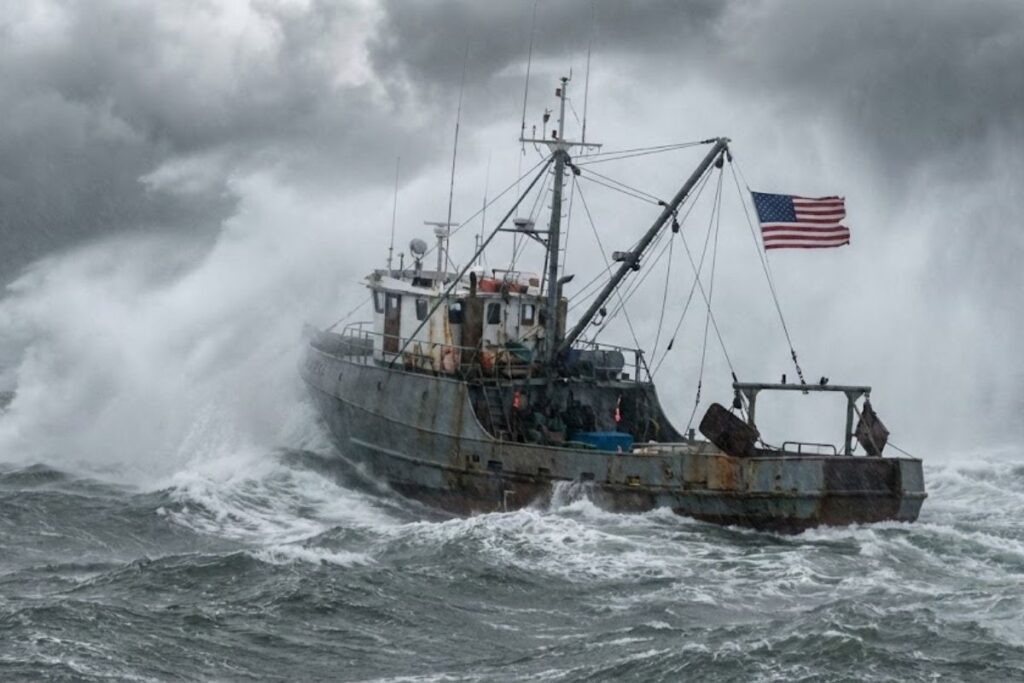
Raymond Canastra has kept a close eye on New Bedford Harbor, Buzzards Bay and beyond for as long as he can remember. Some mornings, the horizon stays friendly, and the fleet heads out with quiet confidence for their trip ahead. Other days, the clouds drop low, the wind turns sharp, and the swells roll in with a hard, uneven rhythm. On those days, the seasoned captain and auctioneer makes the same call he has made across decades on this water. He tells the boats to come back in. “Mother nature controls our lifestyle,” he says, and he has said it time and time again. Weather always gets the final vote. Quotas can wait, markets can shout, and schedules can slip, but nobody negotiates with a turbulent sea. Coming out of a tragic winter That truth feels even more bitter coming out of a rough winter for the Massachusetts fishing community. On January 30, 2026, the F/V Lily Jean sank off Cape Ann, and seven lives were lost. Just over a month later, on March 5, the F/V Yankee Rose capsized and sank near Race Point, leaving one dead and one missing, before the search was suspended. The Lily Jean and the Yankee Rose sit heavily on the minds of fishing families because they remind everyone on the waterfront of the same hard reality: familiar waters can surprise the most experienced crews. Sometimes the danger arrives with rough, freezing conditions. Sometimes it arrives on a day that looks almost calm. Heartbreaking losses like these are the reason captains like Raymond watch every shift in weather so obsessively. When the weather growls, boats listen On a working waterfront, captains track wind speed, sea state, icing risk, and visibility before they talk quotas. A forecast may look manageable a few hours prior, then a squall line flips the plan before the fleet can set sail. The National Institute for Occupational Safety and Health (NIOSH) links severe weather to the majority of vessel disasters in U.S. fisheries. That sobering reality pushes experienced captains to treat storm warnings as a stop sign, not a suggestion. Modern tools help decision-making. Captains check National Weather Service (NWS) Marine Weather Services Program, buoy readings, and models before committing to trips. Still, judgment carries the weight; local knowledge tells you how a northeast wind shapes seas outside Buzzards Bay. When Raymond calls boats home, it’s a decision that protects people, that protects gear, and protects local families so that they can fish again the following week. MORE: Why fair commercial fishing wages matter for U.S. seafood supply The very real dangers of bad weather on the water Bad weather doesn’t just slow a trip down, it changes how a boat behaves under your feet. Captains know these patterns, so they treat fishing boats in bad weather like a different machine entirely. When Raymond calls the fleet back, he chooses a quieter dock over a louder ocean that offers no second chances. RELATED: The Canastra Story: A family name that carries new meaning When the sea turns deadly, the docks remember New England crews still talk about the Andrea Gail and the storm that never gave her a second chance. She left Gloucester in October 1991, and the Halloween nor’easter closed in fast and hard. The boat never came home. The Perfect Storm put that loss on both the page and screen, but fishermen were already carrying the story with them as they readied themselves for their next trip. Weather writes the same lesson across coasts, even when the names and latitudes change. In 1959, the Escuminac disaster killed 35 fishermen after a sudden storm overtook small boats in the Northumberland Strait. In 1967, a fast squall on Lake Michigan capsized more than 150 small fishing boats during the coho run. Seven died, 46 were injured. So when Raymond makes the call from New Bedford, he hears history in the wind and puts his people before the day’s catch. But when he turns boats back, he also turns off that day’s earning power for everyone onboard. A lost trip feels like lost ground, because bills still land even when fish don’t. Captains have to reshuffle ice, trucking, delivery slots and crew timing, then hope the next window holds. The decision looks simple from shore, yet it takes nerve when everyone wants a check and a clean trip. However, in 2010, catch sharing turned the tide of balancing fishermen’s lives with their livelihoods. Giving fishing boats in bad weather room to breathe Catch shares work like reserved portions of the yearly catch that managers assign before the season starts. Instead of racing through a short window, each permit holder, sector, or group fishes against its own allocation. That structure matters in New England, where NOAA rolled out major catch share programs in 2010. The groundfish sector program arrived through Amendment 16, and it allowed vessels to join sectors or fish the common pool. The Atlantic sea scallop individual fishing quotas IFQ also started in 2010. Catch shares protect fishermen because they trade urgency for timing, and timing lets captains respect the forecast. When crews control when they fish, they can skip rough days instead of forcing trips into marginal conditions. NOAA has tied that flexibility to real behavior changes, including fewer trips during the stormiest wind days. Research on a West Coast catch share fishery found fishing on the highest wind days dropped by 79 percent. This doesn’t make the ocean safer, but it does make the safest choice feel possible when pay checks sit on the line. And when captains get that room, they can choose the weather window that brings crews home and boats back out tomorrow. Seasonal weather patterns shape the whole year Crews don’t plan trips one at a time; weather teaches patterns across months and years. In winter, cold air and spray can load ice onto a boat and steal stability fast. In shoulder seasons, fog and fast fronts test visibility, and force captains to
Saving the stories behind America’s most valuable fishing port

For Jennifer Tichon, her family’s legacy in New Bedford had existed only in stories passed down through the years. That changed the moment she stepped into the New Bedford Fishing Heritage Center (FHC), and her father pointed out a familiar face on the screen in front of them. Suddenly, her great-grandfather came to life in black-and-white footage. “We were all in awe! Everywhere we looked, it was somewhere in New Bedford we knew, someone we knew, something we’d seen, and sounds and voices we recognized,” said Jennifer. It’s moments like this that make preserving New Bedford’s fishing stories so important to FHC executive director Laura Orleans. “It’s been kind of my life’s work to try to make sure that the fishing story is told, and told by the people who live it as much as possible,” she says. New Bedford Fishing Heritage Center’s mission New Bedford’s bustling docks have launched an untold number of journeys into the Atlantic over centuries, each one carrying not just crews and equipment, but stories of risk, resilience, and community. However, these firsthand memories are at risk of disappearing forever. To preserve them, New Bedford’s Fishing Heritage Center has built an impressive archive of family and community stories through exhibits, programs, and digital collections. Though relatively compact at just 3,000 square feet, the museum’s exhibitions pack an emotional punch for many. For visitors like Jennifer, that impact can be deeply personal. Seeing her great-grandfather in motion transformed her understanding of her family’s history. “It’s common for someone to walk in and see a face they know staring back at them from an exhibit,” Laura says. “But as our community ages, or in those tragic cases where lives are lost at sea, the weight of this work grows.” The people behind the history At the heart of New Bedford’s fishing heritage are the people themselves. Many of the city’s fishermen come from families who have worked these waters for decades. Their knowledge of how to read the sea, mend nets, and endure long, dangerous trips is often passed down orally. The FHC has spent a decade curating this material so visitors can explore and contribute to the story of New Bedford’s fishing industry. By uploading oral histories, family stories, photographs, logbooks, and rare footage, the Center does far more than display artifacts. It preserves the emotional and economic story of New Bedford’s fishing industry. New Bedford’s story runs deep New Bedford’s history is often framed through its whaling past or broad accounts of the local fishing industry’s trials and tribulations that only tell a small part of a fascinating story. What often gets lost are the real community stories that made the port what it is today: multi-generational fishing families; immigrant communities woven into life on U.S. docks; and a rising wave of women reshaping the industry from within. These voices form a living archive that carries the port’s history forward. Preserving them ensures that its identity and future are shaped not only by industry and data, but by the families who continue to sustain it. MORE: The Canastra Story: A family name that carries new meaning Time is running out Preserving New Bedford’s fishing history has become a race against time. If their value isn’t recognized, family photographs, logbooks, and settlement sheets risk being thrown away or forgotten. Yet these everyday items often contain the richest historical detail. Laura says we’ve reached an especially critical time because many of those who lived through New Bedford’s most influential moments are now in their 70s, 80s, or older. When these voices are lost, entire chapters of the community’s history might disappear with them. “We have become the repository for so many stories and photographs that might otherwise vanish,” Laura explains. How the archive keeps stories alive beyond New Bedford For fishing families, the heritage center offers a way to reconnect with their history. But its impact extends beyond the local community. The digital collection is used by students, researchers, authors, local media, and even documentary filmmakers to bring their projects to life. Laura points out that the archive currently receives around 300 searches each month, reflecting what a valuable resource it has become. She says, “Over the last decade, when we’ve lost pillars of this industry, I’ve been able to reach out to their families and say, ‘We have this oral history we did with your father. We want to share it so you can hear his voice again.’ “That’s why this center and the archive really matter.” Reconnecting families with their fishing roots One of the FHC’s more recent exhibits, Hauling Back, takes its name from the process of retrieving fishing gear from the water after it’s deployed (the name also reflects the way fishing families pull knowledge, stories, and skills from the past to share with future generations). Supported with federal funds from the National Maritime Heritage Grant program, the exhibit grew out of a desire to reach those who had not previously been closely involved. “Getting involved with the Fishing Heritage Center has not only helped me feel closer to my father after his death, but it has also helped me feel closer to my heritage,” said Kaylen Quintin, an FHC board member whose father Tommy was lost at sea. Laura hopes these experiences inspire other fishing families to reconnect with their heritage and with the institution preserving it. “For a lot of people who walk in the door, we’re offering a connection to their family’s history,” she says. In many cases, that connection continues to grow. Laura says families featured in exhibits often go on to donate materials, contribute financially, or deepen their involvement in other ways, helping sustain the center’s mission. How to support the Fishing Heritage Center The best way to support the FHC is to visit its digital archive. Whether you’re researching, learning, or simply curious, it offers a meaningful way to connect with the people and history behind the industry. If you would like to support the Center
Why the U.S. fishing industry needs new blood to stay afloat

From the waterfronts of New England to the harbors of Alaska, fishing docks once hummed with anticipation. Young hopefuls would crowd the dock, eager to join a crew and learn the trade from seasoned captains. Today, however, reveals a changing tide. Young faces are steadily disappearing, leaving captains like Henrique Franco, who has fished the North Atlantic for decades, in a difficult position. “There’s a big difference today,” says Henrique. “Before, if a guy missed a trip, you had five or six guys ready to go. Right now, you don’t see that down the docks. They’re empty. “If that doesn’t change very soon, we’ll have no fishermen.” As veteran captains retire with fewer recruits to replace them, the industry faces more than a troubling labor shortage; it’s also losing the generations of valuable knowledge that keeps crews and livelihoods safe. So, where are the aspiring young fishermen that the industry so desperately needs to start taking the wheel? The graying of the fleet Over the years, the demographic landscape of U.S. commercial fishing workers has shifted toward an alarming imbalance. The number of fishers and owners aged 65 and older nearly doubled from 7.6% in 2016 to 13.5% in 2024. Meanwhile, those under the age of 30 account for only 8% of the workforce. The result is a growing shortage of qualified captains nationwide, which is already taking its toll on New England’s working waterfronts. According to a recent NOAA Fisheries report, New England’s commercial fisheries support nearly 290,000 jobs and generate more than $1.4 billion in annual revenue. The region also boasts the nation’s highest-value fishing port, New Bedford, MA (home of Canastra Fishing Co.), where 2023 landings alone were valued at approximately $363 million. But the world-leading value of New England’s commercial fishing sector is only as stable as the hands that handle the nets. And Henrique knows there’s only one way to ensure that knowledge is properly passed down through the crew. “I always have the experienced guys teach the new guys the right way,” he says. “But it takes time.” As those experienced hands disappear from the deck, so does the knowledge that keeps crews one step ahead of challenges—and the catch at the highest quality. RELATED: The value of an experienced fishing crew for seafood buyers What’s keeping the next generation of fishermen away? No single problem explains why fewer young people are pursuing commercial fishing careers, but there are several undeniable contributing factors. Physical demands and safety perceptions Commercial fishing has long been known as one of the most physically demanding jobs in the country. Long hours, rough weather, and the constant risks of working at sea can make the career appear daunting to younger generations. Henrique explains, “It’s not easy. It’s hard enough working in a factory and putting in those hours. But in fishing, the ‘factory’ is moving, and you’re out there in the cold for four to 10 days at a time. Most new fishermen just quit.” Competition from other industries Young people growing up in coastal communities now have more career options than ever, offering stability without the inherent dangers that come with commercial fishing. Industries such as tourism, technology, and healthcare attract people entering the workforce with steady incomes, predictable schedules, and benefits that commercial fishing rarely guarantees. Cultural shifts away from trade careers Over the past few decades, cultural expectations around work have also changed. Many schools emphasize college and professional careers, sometimes at the expense of traditional trades. As a result, fewer young people see fishing as a viable long-term path, even in communities where it’s been a way of life for generations. Regulatory complexity The U.S. fishing industry is governed by more than 40 different laws and policies (e.g., the Magnuson‑Stevens Act, Marine Mammal Protection Act, Endangered Species Act, etc.). These federal, state, and regional regulations create the legal framework for everything from catch limits and habitat protection to bycatch and endangered species protections These rules are designed to protect fish stocks and ensure long-term sustainability. But for someone just starting out, the complex regulations can make understanding how many trips they can take and what they can earn confusing. High cost of permits and vessels Commercial fishing permits can cost as much as $300,000, while a vessel can add another $75,000 to well over $1 million. Then you’ve got the cost of fuel, gear, maintenance, crew, insurance… Of course, young fishermen don’t typically enter the industry at this level, but it’s a huge deterrent for those seeking a long-term career in fishing. RELATED: Why fair commercial fishing wages matter for U.S. seafood supply Breaking into the fishing industry For those who aren’t dissuaded from a life on the ocean waves, new pathways are emerging to help the next generation find their footing in the industry. In 2021, Congress passed the Young Fishermen’s Development Act, which provides grants for essential on-ship training and professional mentorship. Organizations across the country offer apprenticeship programs that help bring new workers into the industry, including: Beyond federal assistance, several institutions offer degrees in the fishing sector. Massachusetts Maritime Academy serves as a key training ground for much of the New England fishing fleet. Maine Maritime Academy (MMA) offers a Small Vessel Operations track popular with commercial fishermen, while SUNY Maritime College in New York offers a Marine Operations program for commercial work. While these programs are helping rebuild the talent pipeline, the industry that new fishermen are entering looks very different from the one their predecessors joined decades ago. How commercial fishing has evolved Technology now plays a central role in how modern commercial fishing vessels operate. Fleets like those operated by Canastra Fishing Co. rely on advanced sonar systems, digital catch tracking, and precision navigation tools that help crews locate fish efficiently while reducing unnecessary fuel use. Safety has also improved alongside these technological advances. Today’s vessels carry modern life-saving equipment, conduct regular emergency drills, and place stronger emphasis on crew training and risk awareness. Sustainability has become
The value of an experienced fishing crew for seafood buyers

Savvy seafood buyers can spot a poorly handled fish from a mile away. They see it in the texture, in the scuffed skin, in the uneven color… And according to seasoned fishing captain Henrique Franco, those problems can emerge well before they arrive at the dock. The Portuguese native—who has spent decades fishing the North Atlantic Ocean—firmly believes that quality seafood starts and ends with the crew handling it. When all is said and done, Henrique builds his crews and processes around one priority above all: “You’ve got to take care of your fish.” What experience looks like on deck Seasoned deckhands protect texture and appearance through simple habits that inexperienced crews often treat as nice-to-haves. They keep the pace steady during the haul, protect the fish from bruising, and keep the hold organized lot by lot. “When we do the hauling back, that’s the most dangerous moment,” says Henrique. “If you don’t communicate, somebody’s going to get hurt.” The 53-year-old captain watches how people work together when the pace rises. He wants crew members who look out for each other and keep the workflow clean. Experienced crews treat the haul like a drill they’ve run a thousand times. They read the deck the way a driver reads traffic, because bodies, gear, and fish all move at once. They keep space around tensioned lines, watch for swing, and call out problems before they stack up. That teamwork shows up in the fish and turns a trip into seafood that buyers can plan around—and it all starts with the people who know the work. MORE: Why fair commercial fishing wages matter for U.S. seafood supply The quality chain from deck to hold Once the fish hits the deck, it’s clear to Henrique whether or not a crew member understands the value of proper handling. “Sometimes they don’t clean. They don’t wash the fish really well,” Henrique says. “Sometimes too much ice, sometimes not much ice at all. “I’m very strict about that with my crew. We’ve got to take care of the fish, wash it well, and ice it right.” Ice protects appearance and moisture during long hours at sea. If this crucial step is missed, the fish arrives looking tired, and buyers read it immediately. “With blackbacks [winter flounder], for example, you’ve got to ice them belly up. If you put them the wrong way, they turn red and buyers don’t pay as much. “If you don’t take care of the fish, you go to the dock and instead of a dollar fifty, you get eighty cents.” Crew members who chase speed and forget consistency reveal their inexperience. Henrique puts it plainly: a crew can work hard and still lose value if they mishandle the fish. Handling mistakes might not seem dramatic on deck, but captains and companies pay for them at the dock and on the processing floor. “You can lose a whole trip like that,” Henrique says. A strict approach to handling doesn’t just matter to captains, it matters to buyers too. A stable crew produces a stable process, and a stable process produces predictable lots. RELATED: Why domestic seafood creates a more reliable supply chain Where quality starts to break down Convinced by his years sharing boats with crews that can make or break a trip, Henrique manages the risk before the boat even leaves the pier. “I have to know the person. It’s hard to give a job to someone I don’t know,” he says. Henrique uses the waterfront the way other industries might use references. “I ask other captains about him. ‘Is he a good guy?’ I need information.” In fact, the risk-averse captain would take a harder trip over a hire he’s not 100% sure of. “Sometimes I’d rather go one hand short until I know I’ve got a good guy,” he says. Henrique makes that call for safety, but he also makes it for quality. “I do everything I can to avoid problems with the boat, with my crew, or with me,” he says. But that doesn’t mean the next generation doesn’t get an opportunity on Henrique’s boat. It just means experience needs to be passed down into the right hands. RELATED: The Canastra Story: A family name that carries new meaning Fishing crews that last Experience doesn’t stay private on a good boat. It moves down the line through correction, repetition and clear expectations. “I always have the experienced guys teach the new guys the right way,” Henrique says. That transfer of knowledge matters in the commercial fishing industry. A crew learns fastest when a seasoned hand fixes a mistake in real time. But for those lessons to stick, Henrique says a new fisherman has to have a passion for the trade. “To be a fisherman, you’ve got to love it. If you do this just for the money, your life will be miserable.” The crews that last build habits that long-term buyers can trust. They protect each other, protect the gear and protect the fish, because they know the cost when they don’t. The buyer sees the crew in the product The best crews consistently land fish that looks right, holds up well and arrives with fewer surprises. And that is largely determined by the experience on the boat. Buyers doing their due diligence to secure a reliable seafood supply would do well to look past the label and start asking who worked the deck. Henrique adds, “If your guys don’t have experience, your fish won’t be good quality.” Ready to work with a fishing company that knows its boats and their crews like family? Drop us a line to talk through Canastra Fishing Company’s handling standards and what real consistency looks like from boat to dock.