
What seafood shoppers really want from ocean sustainability labels
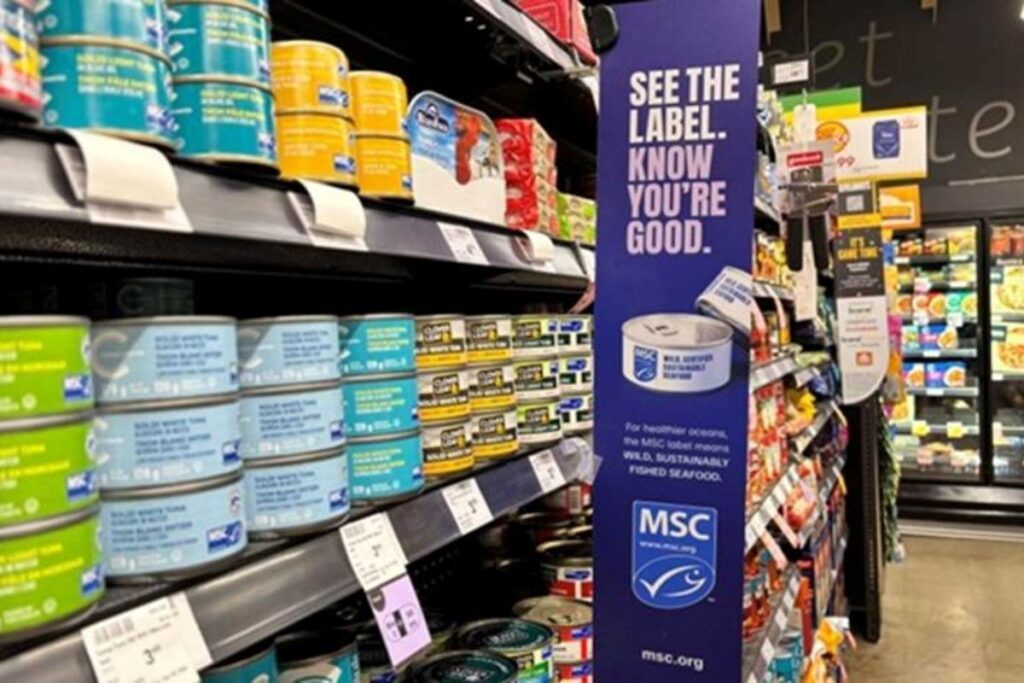
Seafood shoppers today are asking more serious questions about what they eat, where it comes from and how companies prove their sustainability claims. According to a survey by the Marine Stewardship Council (MSC) and GlobeScan, 74% of seafood consumers around the world say brands and supermarkets need to independently verify sustainability claims. The nonprofit also reports that 58% say seeing the MSC label would make them more likely to purchase a product. And 52% would actually pay more for certified seafood. For retailers, foodservice teams and seafood distributors, those stats point to a clear commercial reality: consumers are worried about the state of the oceans, believe their seafood choices can make a difference and increasingly expect companies to prove sustainability claims. Concern for the ocean is changing how shoppers buy seafood World Ocean Day brings global attention to ocean health each year, but seafood shoppers don’t seem to need the reminder. The MSC and GlobeScan’s research shows 91% of consumers worry about the state of the world’s oceans, while 64% believe their seafood choices can make a difference to ocean health. That creates a clear challenge for seafood businesses. Shoppers and diners care about the ocean, but they still need help turning that concern into a confident purchase. At the seafood counter, freezer case or restaurant menu, they can’t verify every sourcing claim. They need simple, visible proof that helps them choose quickly. MORE: How MSC certification strengthens confidence in seafood sourcing Shoppers demand proof, not soft green claims “Consumers are increasingly ‘voting with their forks’ for sustainable seafood,” MSC reported in its consumer research. Nine in 10 seafood lovers may care deeply about ocean health, but they still need to make quick decisions at the seafood counter, freezer case, or restaurant menu. Words like “responsible,” “ocean-friendly,” and “better sourced” may sound reassuring, but shoppers increasingly want evidence behind the claim. They can’t audit every sourcing claim in the moment. They need something clear, visible, and credible. MSC says its blue fish label gives assurance that a product has been independently verified for sustainability. It also points to DNA testing, investigations, and unannounced audits as deterrents against mislabeling. For Canastra Fishing Co., that proof connects directly to the work behind the product: domestic sourcing, documented supply chains, and seafood that buyers can trace back to real fisheries and real fishing communities. A label may catch the shopper’s eye, but the story behind it still has to hold up. A label is only as strong as the supply chain behind it A shopper sees the label. The buyer has to stand behind it. Retailers, foodservice teams, and distributors need suppliers who can support the claim with clear documentation, not just good intentions. If a product carries a third-party sustainability label, the buyer may need to confirm where it came from, how it moved, and whether each handoff protected the certification claim. That’s where chain of custody becomes commercially important. It gives buyers a record of how certified seafood moves through the supply chain, from harvest through processing, storage, distribution, and sale. Without that record, a sustainability claim can weaken before the product ever reaches the customer. A strong supplier should help answer that question quickly and clearly. That means providing documentation, origin details, certification information, and product records that support the story on the label. “If a customer asks us six months later where a product came from, we can trace it back through bills of lading, invoices and records right to the source,” says Ben McKinney of Canastra Fishing Co.’s operations. The label gives shoppers a reason to trust the product. The supply chain gives buyers a reason to trust the supplier. Buyers need sustainability stories they can actually use Retail buyers, foodservice teams and distributors need stories their customers can understand at the seafood counter, on a package, across a menu or in a sales conversation. That’s where some sustainability messaging often falls flat. They have to turn supply chain detail into a simple customer-facing message without watering it down. A third-party label helps because it gives the claim a recognizable starting point. But the strongest stories go beyond the badge. They connect verified sustainability to origin, species, quality, fishing communities and the people behind the product. That kind of detail helps retailers and foodservice teams move sustainability from a policy statement into something customers can see and trust. For Canastra Fishing Co., that story starts in New Bedford. Domestic seafood, working vessels, documented supply and real fishing families give buyers more than a certification claim. They give them a product story with roots. When shoppers ask where seafood is from and if it’s sustainable, they increasingly want to know who stands behind the claim. The strongest labels point back to real accountability Consumers want to know the seafood in front of them comes from a source someone can stand behind. A certification can give the first signal, but lasting trust comes when the claim connects to a supplier who can explain the product, show the documentation, identify the source, and answer follow-up questions without hedging. That’s where shopper expectation and buyer responsibility meet. “There’s a lot to be said for our story, who we are and the background,” says Cassie Canastra Larsen, CEO of Canastra Fishing Co. Book a call to learn how Canastra Fishing Co. helps buyers source MSC-certified seafood with clearer documentation and stronger shopper trust. Looking for traceable domestic seafood backed by documented sourcing and supply chain transparency? Drop us a line.
How generations of reinvention shaped New Bedford’s seafood industry

New Bedford has weathered more than one tide of change over the years. From whaling capital to textile city, fishing port to modern seafood hub, the city’s people have always found new ways to keep working as the world around them evolved. Today, that same capacity to navigate change still shapes the most valuable commercial fishing port in the United States. But New Bedford’s value isn’t only the volume of seafood moving through the harbor; it’s the depth of history that informs the ecosystem around it. A port built on reinvention In the 1800s, whaling helped turn New Bedford into one of the wealthiest cities in North America per capita. Ships left the harbor for long, difficult voyages. Families built businesses around the waterfront. Wealth, risk, labor and immigration all moved through the same streets. Then the industry changed. Whaling declined as petroleum, industrial change and shifting markets reduced demand for whale oil. But New Bedford didn’t simply switch from whaling to fishing overnight. For decades, textiles became the next great engine of the city’s economy, with mills popping up along the Acushnet River. This is where New Bedford’s tapestry grows richer. Cotton manufacturing brought new work, new investment and new immigrant communities from Portugal, French Canada, Poland and beyond into the city. RELATED: The Canastra Story: A family name that carries new meaning The textile industry gave New Bedford another period of prosperity, but it didn’t last forever. When the mills started to fade By the 1920s, New England textile manufacturing was under pressure from lower-cost mills in the South. Wage cuts, competition and changing economics put New Bedford’s mill workers under pressure. In 1928, a proposed wage cut led to a major textile strike involving roughly 30,000 workers. The strike showed how much the city still depended on mill labor, but it also showed how fragile that economy had become. The Great Depression added more strain. Mills closed. Jobs disappeared. The industry that had carried New Bedford beyond whaling couldn’t carry it forever. Meanwhile, another working waterfront was taking shape. The fishing port rises Modern commercial fishing in New Bedford began modestly around the final years of the whaling era. Small boats worked local waters. Gear improved. Vessels grew. What started as a smaller working fishery gradually became the foundation for a new waterfront economy. Captains and owners invested in new technology, from early draggers and winches to cold storage, fish houses and auction systems. By the 1920s and 1930s, the fishing fleet was expanding. Shore-side businesses began catching up to what the boats needed: ice, gear, unloading, processing, sales and distribution. Scallops, groundfish, swordfish and other species moved through the port. Over time, New Bedford became less a place trying to replace one lost industry and more a city building its next chapter from the same waterfront knowledge. That’s one of New Bedford’s greatest strengths. The port has been shaped by whaling families, mill workers, immigrant communities, captains, crews, auction buyers, processors, gear suppliers, cold-storage operators and seafood businesses that learned how to keep working through change. “Working people, whether they’re fixing an engine or risking their lives on the deck of a scallop boat, don’t often have their stories told,” says Laura Orleans at the New Bedford Fishing Heritage Center. That’s why the fishing story deserves to be told alongside the whaling story. Because it’s a story of people who kept the waterfront alive when other industries faded. MORE: Saving the stories behind America’s most valuable fishing port Why New Bedford’s history matters today Today, New Bedford remains one of the most important fishing ports in the United States. Around one million pounds of seafood moves in and out of the port each day, and the port has held its place as the nation’s most valuable commercial fishing port since 2001. But a port like New Bedford offers more than volume. It offers a working system built around family businesses that understand what it takes to bring domestic seafood to market. Some of that knowledge is technical: where fish move, how weather changes a trip, how to handle product properly, how to land it quickly and how to keep quality intact. Some of it is personal: which crews can be trusted, which families have stayed through difficult years, which businesses understand that a landing is never just a transaction… “Families and generational businesses are fundamental in New Bedford,” says Cassie Canastra Larsen, CEO of Canastra Fishing Co. In a market shaped by imports, shifting regulations, labor pressure, sustainability expectations, freight costs and questions about traceability, New Bedford’s history is a powerful asset in seafood sourcing. The port can’t answer every challenge in the U.S. seafood market. No single port can. But it can offer something many buyers are looking for: domestic seafood with real infrastructure behind it, experienced people close to the source and a port culture built around local knowledge. For Canastra Fishing Co., that’s where New Bedford’s history meets the needs of modern buyers. “We have decades of experience, a loyal, incentivized workforce and the most modern logistics and technology to bring the freshest fish to market,” says Cassie. “We can prove this traceability all the way down the supply chain too.” MORE: The value of an experienced fishing crew for seafood buyers A working waterfront with more to give New Bedford’s story has never been still. Its waterfront has seen industries rise, fade and change shape. But again and again, the city’s people have found ways to keep going. Good seafood supply comes from people who understand the port and the pressure behind every landing. It comes from supply chains with a closer connection to the source. It comes from companies that know the waterfront because they’re part of it. As veteran captain and seafood auction pioneer Raymond Canastra says, “The waterfront is not a job. It’s your life. You’re thinking about the waterfront 24/7.” That’s what New Bedford carries forward: the passion, community and knowledge to keep seafood moving when the
How catch shares changed who gets to fish in New Bedford

Catch shares determined who could afford to fish, who had to buy permits, which species became daily stress points and why one boat’s quota problem could ripple through an entire sector. The system also raised a harder question that still sits at the center of the debate: what happens when the quota system depends on science that fishermen don’t trust? The shift that changed how boats could fish Before catch shares, New England groundfish worked under a days-at-sea model. A vessel received a set number of fishing days each year. What the crew landed depended on weather, skill, timing and what came up in the net. “A day at sea is, in many ways, a very big unknown,” Cassie says. “If you’re going to go out there for a day, you could catch no fish, or you could catch a ton of fish.” Catch shares changed that structure. Instead of managing time at sea, the system managed annual quota by species and permit. Permit owners joined sectors that manage quota together. A sector can lease quota, monitor landings and make decisions that protect the group from overfishing. “If one permit owner overfishes, it could shut down the entire sector,” Cassie says. “So each individual becomes liable for the whole group.” Catch shares didn’t only set limits. They changed the relationships between vessels, permit owners and the people who had to manage the risk together. RELATED: ‘Mother nature controls our lifestyle’: The real fishing authority History followed the permit, not the fisherman When catch shares came in, managers had to decide how much quota each permit should receive. That meant looking back at fishing history. In principle, that seems fair. In practice, Cassie says it missed how the dock actually worked. “That whole situation was kind of wonky,” she says. “It’s where some of the controversy started.” Some permit owners had leased their days to other fishermen under the old system. Those fishermen caught the fish, built the practical history and depended on the work. But when quota percentages were assigned, the history often followed the permit, not the person who had fished those days. “At the time, a lot of people got screwed,” Cassie says. Access to fish became something businesses had to buy, lease or combine across enough species to keep fishing. Critics may still imagine an idyllic scenario with a single operator with one boat and one permit. But Cassie says that version of the fishery is long gone. “We’re not in that world anymore,” she says. “It doesn’t exist.” Cassie says owners were looking for a way out. “It didn’t make sense for them to hold on to permits,” Cassie says. “They just wanted to be done.” And once quota became the price of staying in, bycatch started deciding who could afford to leave the dock. RELATED: The value of an experienced fishing crew for seafood buyers The fish you don’t target can still stop you fishing Bycatch existed before catch shares. But under a species-by-species quota, it became a business problem that could stop a trip. A “choke species” is a fish with limited available quota. A boat may target haddock or pollock, then catch hake along the way. But when hake quota runs tight, the boat has a problem even if the target fish are there. “My guys are out there saying, ‘I can’t stay away from it. I’m avoiding it,’” Cassie says. “They’re not fishing. They’re avoiding fish.” That’s where catch shares can feel disconnected from real life on the water. Crews may see plenty of a species, but still face cuts because the system reads the numbers differently. “How is the science saying a species needs to be cut 78% when I’m out here and I can’t stay away from it?” Cassie says. “It’s very frustrating.” The frustration goes beyond cost. If fishermen can’t land a species because they don’t hold enough quota, low landings can make the stock look weaker. “They’ll use the argument, ‘Well, they’re not landing it, so there must not be any out there,’” Cassie says. “We’re not landing it because we can’t!” That turns bycatch into one of the biggest daily pressures in the groundfish business. “Now, bycatch is our number one stressor,” Cassie says. MORE: Haddock vs cod: Key differences buyers need to know When staying in meant buying more access Catch shares changed the value of permits. If quota gives a vessel access to fish, then owning enough quota across enough species becomes a business necessity. That can make consolidation look suspicious from the outside. Cassie says she understands the concern, especially when outside investors enter the industry. “That was concerning for people, because you get these outsiders coming in,” she says. “They’re going to try to make it corporate and not really get back to the fishing community and where the roots are.” But she draws a line between outside ownership and a working waterfront business trying to keep boats fishing. For Cassie, the difference comes down to how a company treats the people behind the permits. If quota costs rise and trips get harder to make work, owners can start looking for savings elsewhere. That can reach crews quickly. “If you’re not making money, there are so many variables,” she says. “Outside investors are going to start to look at the crews and think about how they can save money. “Canastra Fishing Co. will never be that,” she says. “It’s just never going to happen.” MORE: Why fair commercial fishing wages matter for US seafood supply Why fishermen don’t trust the numbers Cassie doesn’t reject quota management. She rejects quota management built on data that doesn’t match the reality on the water. “I think catch shares would be fine if the science were better,” she says. “But our science is terrible.” Her frustration starts with how managers collect data for New England groundfish. Cassie says the system relies too heavily on limited survey work, especially when those surveys don’t reflect what crews see
Scallop sizes explained: choosing the right count for your program

On the New Bedford waterfront, two scallop lots can land on the same morning and tell very different stories. One may carry the big, clean U/10 count that restaurants want for an entrée. Another may offer smaller 20/30 scallops that make more sense for portion control, prepared meals or high-volume foodservice. For seafood buyers, count per pound shapes everything from pricing to presentation. So the best count really depends on the job the scallops need to do. What common scallop sizes actually mean Scallop sizes tell buyers how many individual scallops usually make up one pound of product. While exact sizing can vary slightly between suppliers and landings, these categories give buyers a reliable framework for comparing products and planning orders. Size What it means Typical use U/10 Fewer than (under) 10 scallops per pound Premium presentation 10/20 10 to 20 scallops per pound Restaurants, retail, premium frozen packs 20/30 20 to 30 scallops per pound Portion control and food service 30/40 30 to 40 scallops per pound Prepared meals, mixed seafood, value menus In simple terms: Larger scallops usually command higher prices per pound, but buyers need to judge scallops by more than just how big they are. MORE: New Bedford scallop prices: What moves the market? Why the biggest scallop does not always mean the best buy Buyers typically pay more for larger scallops. A U/10 scallop delivers a very different product experience than a 20/30 or 30/40 count. It gives restaurants a stronger center-of-plate presentation and helps retailers create a more premium product. Cassie Canastra Larsen, CEO of Canastra Fishing Co. and the Buyers and Sellers Exchange (BASE), looks for a healthy spread between size categories. “I like seeing that natural spread,” Cassie says. “It means you’re getting paid for the better product.” But size alone doesn’t carry the price. A larger scallop still needs the right quality, color and consistency to earn its premium. Scallop size helps set the expectation. Quality decides whether the product lives up to it. RELATED: The value of an experienced fishing crew for seafood buyers How scallop size affects ordering decisions The best scallop orders usually start with the intended use. From there, buyers can weigh size, price, and availability against what the product needs to deliver. Menu Larger scallops, like U/10 or 10/20, are often used for dishes where presentation plays a major role. Smaller sizes may work better in seafood pasta, mixed grills, chowders, skewers or composed dishes where consistency and portion flexibility matter more than visual impact. Retail packs A premium frozen pack often needs a count that looks generous, clean, and high value at first glance. That can make U/10 or 10/20 scallops a strong fit. For family packs, value-led products, or mixed seafood items, the priority may shift toward versatility and portion economics. Portion control A restaurant serving three large scallops per plate needs a different buying strategy from one portioning scallops by weight for salads, bowls or prepared meals. For multi-location foodservice programs, finding a supplier that offers consistent count ranges helps control plate cost across menus. Availability Not every scallop size is consistently available throughout the year. Landings, weather, fishing areas and market demand can all affect which scallop sizes buyers can secure. A buyer may prefer one count on paper, but the market may point toward another. RELATED: How vertically integrated U.S. fisheries benefit seafood buyers Size is only one part of the scallop spec Scallop count gives buyers a useful starting point, but it shouldn’t carry the whole sourcing decision. Product origin affects both traceability and availability. Domestic scallops offer a clearer sourcing story, especially when sustainability-focused customers expect more transparency from their seafood. Grading consistency also deserves to be part of the scallop buying conversation. Buyers need scallops that look, cook and portion reliably across each case. A mixed or uneven lot can create problems even when the count looks right on paper. Moisture content, handling and meat condition all affect how scallops perform during thawing, cooking and plating. So, the real question for buyers becomes whether your supplier can deliver to these standards consistently. RELATED: How MSC certification strengthens confidence in seafood sourcing Match the scallop size to the seafood program Scallop count should be treated as a guide, not a be-all and end-all of sourcing criteria. The number on the box helps narrow the choice, but the product still has to perform once it reaches the kitchen. Smart buyers need real market context to make the best decisions, not just a count range. Contact Canastra Fishing Co. to learn how market insight, domestic sourcing and New Bedford experience can support your seafood program.
What old fishing logbooks tell us about the future of fishing

A box of old fishing logbooks might not look like much at first. The covers are worn; the paper yellowed. Shorthand notes swim across the page in a sea of scribbled numbers and tough decisions. But inside those records, New Bedford’s working waterfront speaks volumes. Old logbooks might not tell today’s seafood industry exactly what comes next. But they do reveal how fishermen, crews and buyers adapted the last time everything changed. What fishermen recorded at sea Laura Orleans at the New Bedford Fishing Heritage Center is casting a wide net to collect as many of the city’s logbooks as she can. “They tell you a story of the prices at the auction, how much fish was coming in, the wages being paid to the captain and crew…” she says. “Everything is in there!” One recently retired New Bedford fisherman, Bill Blount, spent around 55 years fishing. His family offered the center his collection of logbooks. One page might show what a boat landed. Another might list what buyers paid at auction. Settlement sheets add another layer. They connect the catch to the market, showing how a day at sea turned into income. Vessel trip reports bring in the operational side. They show where boats worked, what species came in and how fishing activity moved across time. Then there are the handwritten details that don’t always fit neatly into a form. A note about weather. A correction in the margin. A decision to move, stay, tow again or head home. A logbook holds key figures, but it also carries judgment we can learn from today. “To document change as it’s happening, and capture what was before it’s completely gone, both are extremely important,” says Laura. “It’s immensely valuable for historical purposes. It’s a story of everything!” RELATED: Saving the stories behind America’s most valuable fishing port How logbooks still guide fishing today That same instinct to record what happened at sea still shapes modern fisheries today. Some records still begin with a person making a written note. Others move through electronic reporting tools. Modern logbooks help regulators track fishing activity, support stock assessments and understand how fishing effort moves across areas, species and seasons. They also help connect what happened at sea with records on shore. Vessel monitoring systems show where boats worked and how activity changed over time. When paired with catch data, those records can help build a clearer picture of fishing pressure. The pencil marks in old logbooks and the digital reports used today belong to the same larger story. They help the industry turn individual trips into knowledge that can guide better decisions. Why New Bedford’s fishing logbooks need preserving New Bedford has long known how to tell its whaling story. The city’s fishing story deserves the same level of attention. “Working people, whether they’re fixing an engine or risking their lives on the deck of a scallop boat, don’t often have their stories told,” says Laura. Many of those stories never reach a museum wall or newspaper archive. They stay in kitchens, file boxes, basements and family memories. That’s what makes the Fishing Heritage Center’s work so valuable. Logbooks can show a family what a grandfather faced at sea, and they give working people a permanent place in the record before that story disappears from living memory. “It’s history, culture, economics, environment, food, gender, labor, art…,” Laura says. “The opportunity to digitize them and make them available more widely is really important.” Laura has spent years helping fishing families preserve stories in their own words. She sees the archive as a way to document change while people can still explain what those records mean. Logbooks don’t just preserve what happened; they reveal how fishing communities responded when prices moved, regulations changed, weather shifted and livelihoods came under pressure. The future of fishing will bring its own uncertainty, but these records remind us that the industry has always moved forward through skill, judgment and resilience. MORE: The Canastra Story: A family name that carries new meaning Canastra Fishing Co. is proud to support the efforts of New Bedford’s Fishing Heritage Center and to keep the city’s fishing story alive by connecting seafood with the waterfront that still shapes every landing. If you or your family have logbooks, photos, documents, or footage related to New Bedford’s fishing community, consider contributing them to the collection. Even the smallest pieces can help tell a larger story and ensure this history is preserved for future generations. To donate materials, email archives@fishingheritagecenter.org.
Why veteran captains don’t race home to their families

After a long stretch offshore, every captain feels the pull of home. The crew wants rest, family is waiting, and the catch is already below deck. From the outside, the trip can look finished. But winter doesn’t care how close the boat is to the dock. In fact, the most dangerous decision often comes when land is already in sight. When freezing spray starts hitting steel, a fast ride home can turn dangerous. Water on the bow, railings, deck, and gear starts to freeze. And the vessel takes on heavy ice in places where a shift in weight changes everything… The decision that cost 12 hours Captain Henrique Franco has fished groundfish out of New Bedford for more than 30 years. He became a captain at 23, after training in Portugal as a teen under his father’s mentorship. Since then, Henrique has spent his life reading weather, water, ice, crew, catch, and how a boat handles under pressure. So, when freezing spray starts building, Henrique knows not to race home. In fact, he slows down. On a recent winter trip, Henrique expected to reach the dock at 5:00 a.m. He arrived at 5:00 p.m. Those missing 12 hours came from one decision. Ice started to form on the bow as the boat steamed toward land. Henrique could have pushed through at eight or nine knots. Instead, he cut back to three. “If you don’t slow down, you’ll get a lot more ice—and fast,” Henrique says. “So I’ll go very slowly. Even if I’ve got to be away from home until the weather changes. I’ll do that.” More weight from ice buildup changes how the boat sits, turns, and handles. A captain who keeps pushing on can lose control of a vessel in those conditions very quickly. Henrique chooses safety over time onshore. He waits for the weather to shift and brings the crew, boat, and catch back in one piece, no matter how badly he wants to get home. MORE: ‘Mother nature controls our lifestyle’: The real fishing authority The mistake inexperienced captains make Henrique doesn’t describe choosing speed over safety as recklessness. He describes it as inexperience. Once the fish is in the hold and the boat points toward home, the crew starts thinking about sleep, dry clothes, and family waiting onshore. In that moment, a speedy journey home can feel tempting. But a captain who hasn’t sailed enough winter trips may not know how fast ice builds, nor how his vessel handles under that weight. Night makes the call harder. Visibility drops, temperatures fall, and ice can gather faster than the crew realizes. “You gotta know the boat,” Henrique insists. RELATED: The value of an experienced fishing crew for seafood buyers When land gets close, the work isn’t over Reducing the speed to three knots reduces the risk, but it doesn’t stop the ice completely. Henrique sends the crew onto the deck. They break ice by hand, clear railings, work surfaces, and anything else the spray reaches. Commercial fishing decisions like this don’t appear on an invoice, landing report, or sales conversation—but they affect everything that follows. The safest supply chains depend on decisions like this. Someone has to read the weather, slow down, and protect the crew before the product reaches the market. RELATED: Why domestic seafood creates a more reliable supply chain Before the catch reaches the dock A 12-hour delay can look like lost time from the shore. For Henrique, it meant the trip worked as it should. He brought the crew home. He brought the boat home. He protected the catch. He made the slower call because the faster call carried more risk. Judgments like this sit behind every reliable landing. Seafood buyers often see product specs, volumes, pricing, and delivery windows. They rarely see the decisions that make those numbers possible. Experienced captains help create dependable supply because they know when to push and when to wait. That patience brings the crew home, protects the families waiting onshore, and keeps the waterfront working for everyone who depends on the next landing. At Canastra Fishing Co., experience sits behind every catch, every trip, and every conversation. Drop us a line to talk through how steady, domestic supply from an experienced crew could transform your seafood sourcing.
Atlantic pollock vs other whitefish: A buyer sourcing guide

Pollock has long sat in the shadow of better-known whitefish. Cod carries name recognition, but supply pressure can complicate planning. Haddock performs well, but buyers still need volume, consistency, and margin control. For buyers facing these whitefish sourcing challenges, Atlantic pollock deserves a closer look. Mild, yet slightly richer in flavor than cod or haddock, pollock brings buyers a practical mix of domestic sourcing, culinary flexibility, and underused shelf appeal. In a market where old whitefish defaults no longer guarantee easy supply, Atlantic pollock gives buyers another species worth building around. Where pollock fits into the whitefish conversation Whitefish is a broad seafood category that includes cod, haddock, hake, pollock, ocean perch, cusk, and other mild white-fleshed fish. Atlantic pollock is a member of the cod family, also known as saithe, coalfish, coley, or Boston blue. NOAA lists the species as having year-round availability and peak landings from November through January. Atlantic pollock offers white flesh, firm texture, and a sweet, delicate flavor. NOAA also identifies the fish as very low in saturated fat and a good source of protein, vitamin B12, phosphorus, and selenium. Bottom line for buyers: Atlantic pollock needn’t be treated simply as a backup when better-known whitefish tighten. Atlantic pollock vs other whitefish: Flavor and texture Atlantic pollock doesn’t taste exactly like cod or haddock. Cod tends to offer a very mild profile and large, tender flakes. Haddock brings a slightly sweeter flavor and a firmer structure that works well for frying. Hake can feel softer and more delicate, depending on cut, handling, and format. Atlantic pollock brings a firmer bite than many buyers expect. Its flavor stays mild enough for breaded, baked, fried, and seasoned applications, but it has enough character to stand apart from more neutral whitefish options. That makes it practical for: MORE: Haddock vs cod: Key differences buyers need to know Availability and planning Availability drives the real Atlantic pollock vs whitefish discussion. NOAA reports that Atlantic pollock is not overfished and is not subject to overfishing, based on its 2024 stock assessment. NOAA also lists the species as sustainably managed and responsibly harvested under U.S. regulations. That doesn’t mean buyers should treat Atlantic pollock as unlimited or immune from volatility. Weather, landing patterns, processing capacity, and market demand still affect supply. But compared with more constrained species, Atlantic pollock gives buyers a practical domestic option to discuss when building whitefish programs around availability and value. “Pollock is a smart decision for buyers,” says Ben McKinney, Canastra Fishing Co.’s Chief Operating Officer. “Great availability, great value, and a domestic story retailers can stand behind.” Atlantic pollock vs Alaska pollock Buyers need to understand the distinction between Atlantic pollock and Alaska pollock. Alaska pollock is one of the world’s largest fisheries and a major species in U.S. seafood production. NOAA reports that Alaska pollock landings from the Bering Sea and Gulf of Alaska totaled more than 3 billion pounds in 2023, with products going into fillets, roe, and surimi. Atlantic pollock supports large-scale frozen and value-added supply. It gives buyers a New England groundfish option with domestic origin and a closer connection to East Coast landing and processing infrastructure. Both can belong in a whitefish strategy. But buyers should not treat them as identical products. Atlantic pollock vs catfish Unlike Atlantic pollock, catfish is not a wild-caught whitefish from cold New England waters. U.S. catfish usually comes from freshwater aquaculture and serves a different role in retail, food service, and Southern-style menus. Catfish can work well for buyers who want farm-raised consistency, mild flavor, and familiar domestic supply. Atlantic pollock makes more sense when buyers want wild-caught whitefish, ocean provenance, and a New England groundfish story. For buyers comparing pollock, whitefish, and catfish, the decision comes down to format, customer expectations, and the sourcing story behind the product. When Atlantic pollock makes sense Atlantic pollock makes the most sense when buyers want a domestic whitefish that helps balance cost, availability, and differentiation. It can work especially well for: It also gives marketing teams something to work with. A label that says “whitefish” tells almost no story. A domestic Atlantic pollock program can connect buyers to New England waters, working boats, U.S. management, and a lesser-known species with practical culinary value. That kind of story helps products stand out without leaning on vague sustainability claims. RELATED: How MSC certification strengthens confidence in seafood sourcing When another whitefish may work better Atlantic pollock won’t fit every buyer’s supply needs. Cod still carries strong recognition for premium dishes, traditional applications, and customers who expect cod by name. Haddock remains a strong choice for fish and chips, chowders, and familiar New England seafood menus. Alaska pollock brings unmatched scale for frozen portions, surimi, and large national value programs. Good procurement doesn’t force one species into every role. It builds a whitefish portfolio that can absorb pressure when pricing shifts, landings change, or imported supply becomes harder to manage. Atlantic pollock earns its place in that portfolio when buyers want domestic sourcing, useful volume, and a product that can perform across everyday applications. MORE: The domestic wild-caught whitefish species buyers need to watch in 2026 The bigger opportunity for whitefish buyers Atlantic pollock may not have cod’s name recognition or haddock’s familiar place on menus. But buyers need whitefish options that can handle today’s market, not yesterday’s assumptions. They need domestic supply, clear documentation, consistent communication, and species that help them adapt when the defaults stop working. The strongest whitefish programs don’t depend on one famous species. They depend on buyers who understand the full category and suppliers who know what is actually landing. Ready to compare Atlantic pollock availability for your next whitefish program? Drop us a line to discuss what’s moving through New Bedford.
How vertically integrated U.S. fisheries benefit seafood buyers

Most U.S. seafood buyers know the feeling of a last-minute scramble. A container stalls, a spec slips, a supplier suddenly cannot provide basic paperwork… The longer and more fragmented the supply chain, the more chances there are for something to go wrong. Every handoff between vessel, processor, exporter, distributor, and broker creates another point where quality, timing, or documentation can break down. Vertically integrated U.S. fisheries offer a different model. When one operator controls the catch, handling, packing, and logistics, buyers get clearer accountability, faster answers, and a steadier flow of product. Why vertically integrated U.S. fisheries benefit wholesale buyers “When we control the boats and the process, we can stand behind every lot we ship,” says Cassie Canastra Larsen, CEO of Canastra Fishing Co. “That control protects specs, schedules, and buyer reputations.” NOAA says the U.S. imported 6.3 billion pounds of edible seafood in 2023, and that about 80% of the seafood Americans eat comes from foreign imports. That scale creates opportunity, but it also creates exposure. Many imported products move through multiple independent companies before they ever reach an American buyer. Vertical integration strips out much of that complexity. When one supplier controls more of the chain, responsibility stays clear and problems can be resolved faster. Canastra Fishing Co.’s Chief Operating Officer, Ben McKinney, explains that vertical integration directly addresses the most common concern among seafood buyers. “Every buyer I talk to wants the same thing: consistency,” says Ben. “Working with vertically integrated fisheries is the only realistic way to deliver the level of reliability our clients expect.” RELATED: Why domestic seafood creates a more reliable supply chain The tangible costs of the ‘handoff tax’ When seafood moves between different companies and facilities, the risk multiplies. Buyers end up paying what feels like a “handoff tax.” They spend more time chasing updates, solving paperwork issues, and managing substitutions. And the cost is not only administrative. Long, complex supply chains can also affect the product itself. More transfers can mean more handling, more temperature variation, more repacking, and more chances for shelf life to shorten before the fish ever reaches the end customer. Any one of those issues might be manageable on its own. Stack several together, and it becomes much harder to deliver consistent quality week after week. RELATED: Whitefish wholesale: Domestic vs imported no longer tells the full story Better sourcing shouldn’t come from cutting corners Vertical integration can reduce costs and save stress for buyers, but the way a company creates those savings matters. Some seafood businesses try to gain control by squeezing labor, lowering standards, or putting pressure on the people doing the work. That may reduce a price on paper, but it creates risk elsewhere in the chain. For Canastra Fishing Co., the goal is different. The company wants to remove unnecessary handoffs, improve communication, and create a more direct route from boat to buyer without weakening the people behind the product. “We need to be vertically integrated to provide a better price for buyers, but we won’t do that at the cost of our team,” says Cassie. A supplier that protects its crews, dock workers, office team, and local partners can build a more stable operation over time. Lower prices mean little if they come from poor retention, rushed handling, or a culture that burns people out. Responsible vertical integration should make the supply chain stronger, not just cheaper. Reliable traceability when auditors call The global seafood trade keeps growing. FAO says fisheries and aquaculture production reached 223.2 million tonnes in 2022. Growth at that scale brings more opportunity, but it also raises the stakes for traceability. Buyers need accurate records, clean chain-of-custody documentation, and fast answers when auditors or procurement teams start asking questions. That’s where vertically integrated U.S. fisheries have a real edge. Fewer handoffs usually mean fewer documentation gaps and a faster path back to the source. “For U.S. buyers sourcing seafood directly from the trusted docks of New Bedford, you have a direct line to the crew that caught it,” Ben says. “That’s a level of transparency you simply won’t find with a shipping container arriving from the other side of the world.” New regulations reshaping seafood supply chains Beyond the day-to-day risk of delays and spec issues, tighter rules are making fragmented import chains harder to manage. For some imports, that now means a higher risk of delays or extra paperwork. Importers also face the Seafood Import Monitoring Program, which requires traceability data showing where certain seafood was caught and how it moved into U.S. commerce. NOAA says this applies to more than 1,100 species across 13 groups and covers about half of U.S. seafood imports. That gives vertically integrated fisheries—particularly domestic fisheries—an advantage. Fewer handoffs often mean fewer paperwork gaps, fewer disconnected systems, and a clearer chain of custody from boat to buyer. How to evaluate a vertically integrated seafood supplier Not every domestic seafood supplier that claims to be “vertically integrated” actually operates with the level of control buyers expect. Savvy buyers need to look past the label and ask practical questions. Checklist for buyers to use in seafood supplier calls Vessel ownership and control Processing ownership and location Documentation and traceability Grading and specification consistency Workforce and community standards Handling deviations End-to-end accountability Suppliers who answer those questions clearly have real control. Suppliers who can’t often rely on a looser network than buyers expect. A clearer chain of custody from boat to buyer For seafood buyers who value consistency and hate surprises, sourcing from a vertically integrated supplier is a simpler path. Canastra Fishing Co. became a fully vertically integrated supplier with the 2023 acquisition of vessels and permits from a local fishery. By bringing fishing, auction, and distribution closer together, the company has built a more controlled supply chain for wholesale buyers. That control also creates a responsibility to do things the right way. Canastra Fishing Co.’s vertical integration model depends on the same people who have always powered the New Bedford waterfront:
New Bedford scallop prices: What moves the market?

New Bedford scallop prices can be as volatile as the ocean itself. One week, strong supply can soften pricing. The next, limited volume, larger sizes, better quality, or more active bidding can push prices higher. In most cases, larger scallops command higher prices. But size alone doesn’t carry the market. Buyers still look closely at quality, yield and consistency before paying a premium. Cassie Canastra Larsen, CEO of Canastra Fishing Co. and the Buyers and Sellers Exchange (BASE), sees those forces play out every day. They shape what buyers pay, what fishermen earn, and how far seafood companies can plan ahead. Understanding those shifts starts with the market forces behind every bid. How New Bedford scallop prices are set Scallops are a significant driver behind New Bedford’s title as the nation’s highest-value fishing port. BASE sits at the center of New Bedford’s daily scallop pricing, where buyers weigh up size, quality, volume and demand in real time. The Canastra family’s digital system helped turn New Bedford’s traditional seafood auction into a more transparent marketplace. Today, BASE is widely recognized as the largest public fish auction on the Eastern Seaboard, giving buyers and sellers insight into what moves New Bedford scallop prices. “Everyone’s always asking what’s going to happen with pricing, but you never really know,” Cassie says. “It depends on the sizes coming in, the areas, and how much volume you’re getting at a given time. Right now, it feels like the market is figuring itself out.” Auction activity The Northern Gulf of Maine scallop season opens in April, and the first landings can move the market quickly. “When the season starts, you get a lot of volume, and the price kind of takes a little bit of a drop,” Cassie says. “Then it just, sort of, finds its plateau.” The auction creates pricing through real-time buyer activity. When several buyers compete for the same product, prices rise. When fewer buyers bid, prices can hold steady or soften. “When the auction runs, someone doesn’t just step in and say, ‘I’m paying $18.’ It’s activity-based,” Cassie explains. “If you have three or four buyers competing, the price goes up. If you only have one, that’s the number. The price creates itself. It’s literally the bidding process.” MORE: The domestic wild-caught whitefish species buyers need to watch in 2026 Scallop size and quality Size plays a major role in New Bedford scallop prices, but not in isolation. The market groups scallops by count per pound. The lower the count, the larger the scallop, and the higher the price usually climbs. But quality decides whether that larger size earns its full premium. Buyers also look at meat condition, yield, appearance and consistency across the lot. A larger scallop with strong yield and clean presentation can attract more competition. A larger scallop with poorer quality may not pull the same price. Recent auction data showed a clear premium for U10 scallops over smaller count sizes, underscoring how strongly size can shape the market. Cassie looks for a healthy spread between those size categories. Larger scallops should command a clear premium over smaller sizes when quality supports that difference. When that spread holds, the market has a clearer sense of value. When it narrows, buyers and sellers may read that as a sign that the market still needs to settle. “I like seeing that natural spread. It means you’re getting paid for the better product,” Cassie adds. MORE: Why domestic seafood creates a more reliable supply chain Scallop volume When fewer scallops come in, buyers have less product to compare across size categories and quality. That can make pricing feel tighter, especially when auction activity stays limited. With larger volumes, the market has more to sort through. Prices can move more sharply when buyers disagree on the value of a specific size or lot. Fleet behavior matters, too. If too many vessels fish the same area at the same time, a sudden wave of landings can put pressure on pricing. When boats spread out across different areas and openings, supply reaches the market more steadily. MORE: The value of an experienced fishing crew for seafood buyers How fishing conditions affect scallop prices Climate, fishing patterns, and opening schedules can all influence scallop pricing before product reaches the auction. Colder winters can improve yield because scallops tend to have better meat density. Stronger yield can make the product more attractive to buyers, especially when quality stands out across the market. This season, much of the product has come from the Mid-Atlantic, from waters off New York and Long Island down toward Virginia. “The product looks really good this year. We had a cold winter, and that helps a lot with yield,” Cassie says. But in the longer term, warming waters and changing habitat conditions could create uncertainty for the scallop fishery. And dwindling domestic supply can lead to a greater reliance on imports, again affecting price. MORE: What is redfish? A practical guide for buyers and marketers Why market visibility matters for scallop buyers Scallop buyers can’t control what lands, when boats fish, or how active bidding becomes on any given day. But they can make better decisions when they have a clear view of the market. Visibility helps buyers understand whether a price reflects short supply, strong demand, premium sizing, better quality or temporary auction pressure. It also helps them decide when to move quickly, when to wait, and when to adjust size preferences based on availability. Giving that transparency through the auction matters because seafood pricing should reflect real market activity. For a species as valuable and unpredictable as scallops, buyers need more than a price. To stay afloat, they need the context behind it. MORE: Saving the stories behind America’s most valuable fishing port Canastra Fishing Co. brings auction knowledge, domestic supply experience, and honest pricing to every scallop conversation. Drop us a line to see what’s landing now.
How MSC certification strengthens confidence in seafood sourcing

Today’s seafood buyers simply can’t afford to accept vague sustainability claims—they need proof they can stand behind. As scrutiny of seafood sustainability grows, buyers demand real credentials that hold up to questions from customers, procurement teams and regulators. Marine Stewardship Council (MSC) certification gives seafood businesses a recognized way to separate environmentally sustainable sourcing from empty green claims. For buyers, the MSC blue fish label represents a framework for helping support a healthier ocean, supply chain accountability and long-term supply confidence. In a market where promises have come too easily, MSC carries genuine weight with its rigorous certification process built around stock, environmental impact and fishery management. What is MSC certification? Launched in 1997, the MSC is an independent non-profit organization established by the World Wildlife Fund and Unilever. It was created to address the collapse of the Grand Banks cod fishery after years of intense fishing pressure. The collapse devastated coastal communities, disrupted supply and showed how quickly overfishing can affect the environment, livelihoods and seafood supplies. Decades later, MSC certification is widely recognized as one of the most rigorous environmental standards for fishing in the seafood industry. The fishery certification process is neither quick nor superficial. It can take up to 18 months, followed by annual audits and full reassessment every five years. “It’s a rigorous process, and not all fisheries pass,” explains MSC’s Anthony Mastitski. To earn the MSC label, fisheries are independently assessed by third-party auditors against a science-based framework built on three core principles: MSC certification is more than a marketing claim; it gives buyers and consumers independent evidence that a product comes from a fishery assessed against recognized standards. “Sustainability and traceability are core to what we do, and MSC certification helps validate that with buyers,” explains Cassie Canastra Larsen, CEO of Canastra Fishing Co. MORE: Why domestic seafood creates a more reliable supply chain Why MSC certification matters for seafood businesses Sustainability now directly influences buying decisions, not just brand perception. The global sustainable seafood market is projected to reach $33.34 billion by 2032, up from $13.12 billion in 2018. This growth marks a significant shift in consumer values when it comes to making responsible food choices. Over 1,850 MSC-certified products are available in the U.S. and Canada. The blue fish label is now a staple in most major supermarket chains, including Whole Foods Market, Kroger, Aldi, ShopRite, Walmart, and Target. The momentum is equally strong across the pond. In the U.K., 63% of wild-caught seafood sold in supermarkets now carries the MSC label. Spending on MSC-labeled products reached £1.7 billion ($2.3 billion) in 2025, a 14% jump from the previous period. Foodservice has followed suit. McDonald’s and IKEA have both committed to sourcing only MSC-certified seafood for their menus. “A lot of major retailers and international buyers will not buy certain seafood products unless they are MSC certified,” says Ben McKinney, Canastra Fishing Co. Chief Operating Officer. “If you walk into a restaurant, retailer or wholesaler anywhere in the world and you see that something is MSC certified, you know it’s caught sustainably, processed the right way and can be traced right back to that fishery.” RELATED: The domestic wild-caught whitefish species buyers need to watch in 2026 The blue fish label advantages for seafood buyers MSC certification speaks directly to buyer anxiety around seafood sourcing today. Retailers, restaurants and institutional buyers don’t just want to know whether a product tastes good or arrives on time. They also need to know whether the sourcing story holds up and that they’re actually supporting environmentally sustainable fishing standards. Market access and compliance Certification opens doors with organizations that build sustainability standards into procurement as a non-negotiable. As more governments, retailers and foodservice groups tighten expectations around sourcing, MSC-certified seafood gives distributors a stronger position in competitive bids and supplier conversations. It also reduces the chance that a product gets excluded as rules, policies and buyer standards change. Supply stability Seafood supply chains already face pressure from weather, quotas, tariffs and shifting demand. MSC certification doesn’t remove that volatility, but it does show that a fishery operates within environmentally sustainable limits and follows a management framework designed to protect the stock over time. That matters to buyers planning menus, retail programs and long-term supply agreements. Commercial value MSC certification gives distributors a stronger way to sell on value, not just price. Buyers can always find cheaper seafood. But the blue fish label gives consumers a clear reason to choose a certified product over lower-cost alternatives with weaker credentials. MSC certification serves as a sales and marketing asset; it supports shelf differentiation, menu storytelling, ESG reporting and consumer-facing campaigns. Supply chain transparency Transparency has become one of the strongest trust signals in seafood. The MSC Chain of Custody supports that trust by tracking certified seafood through the supply chain. It gives buyers stronger accountability and better confidence in product origin. “And if a customer asks us six months later where a product came from, we can trace it back through bills of lading, invoices and records right to the source,” McKinney says of Canastra Fishing Co.’s operations. Credibility in an era of greenwashing Vague claims like “natural,” “responsibly sourced,” or “ocean-friendly” no longer carry the same weight. What buyers need these days is proof they can show to customers. “As buyers and consumers become more alert to greenwashing, third-party certification helps businesses show that their sustainability claims are backed by science and rigor,” says Camila Flanagan of MSC. That credibility becomes even stronger when certification connects to a supply chain that buyers can see, understand and trust. Turning sustainability into a strategic advantage MSC certification has moved beyond mere compliance. The blue fish label now supports stronger commercial conversations around trust, accountability, supply and reputation. It gives buyers something they increasingly need: a claim they can explain, document and defend. That matters in a market where vague environmental language no longer carries the same authority. MSC certification doesn’t replace a strong relationship with a supplier that has real